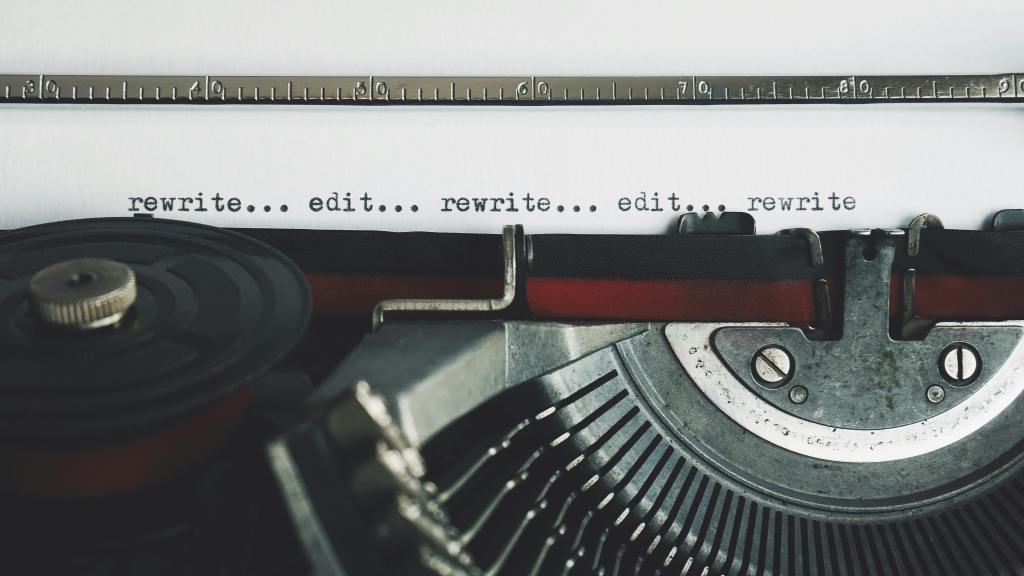
There are no rules in writing, only guidelines. Except there are rules for formatting your writing. Unless your book is an arthouse poem or written in a foreign dialect or language, many magazines and presses adhere to English industry standards, which many readers have come to expect as professional.
Today, I’m giving you a crash course in formatting dialogue, which I see writers, seasoned and fresh, often forget.
Punctuation
The comma and period are often misplaced after a character speaks. It all depends. Typically, before and after a character speaks, you’ll see a comma preceding or following the dialogue of the sentence. For example.
“I hate John,” said Mary.
Or.
Mary said, “I hate John.”
What if you didn’t use a dialogue tag? Some authors avoid tags for creative choices. In this case, your sentences may look like this.
Mary smashed her fist on the table. “I hate John!”
Or.
“I hate John!” Mary smashed her fist on the table.
Without a dialogue tag, the comma is no longer needed. The dialogue and the action of the character are two separate sentences, and the dialogue is always packaged between two parentheses.
What if you want to get fancy, like inserting action lines between sections of dialogue to create a dramatic effect? There are two ways to do this.
“I really hate,” Mary said before smashing her fist on the table, “John!”
Or.
“I really hate him.” Mary smashed her fist on the table. “That man John!”
You might want to adjust the sentence so it still flows well, no matter which method you use.
Dialogue Tags
Not everything is a dialogue tag. Technically, only words that mean “speech” are considered one. Said, whispered, shouted, begged, etc. However, many authors use words like laughed, sighed, and lied creatively as dialogue tags. These words work as dialogue tags and on their own.
Mary laughed, “I love bananas.”
Or.
Mary laughed. “I love bananas.”
Both are correct, but the second one is more correct. Someone can laugh and speak at the same time, albeit very sparsely. It may be better to unpack that word into prose.
Mary held her sides, laughing. “I love bananas!”
Capitalization
Finally, in this lesson, is capitalization. Although dialogue is part of a sentence, if there’s a comma, the first word of spoken dialogue is always capitalized. Additionally, the word following the dialogue, if there’s a comma, is always lowercase. Let’s review a past example.
“I hate John,” Said Mary.
That’s incorrect.
Mary said, “i hate John.”
So is this.
Even when you’re inserting action between dialogue beats, it also depends. You could end a sentence between them or continue it.
“I can’t stand,” Mary said before smashing her fist on the table, “that man John!”
This is fine.
Or.
“I can’t stand him.” Mary smashed her fist on the table. “I hate him!”
That’s also fine.
But.
“I can’t stand,” Mary said before smashing her fist on the table, “That man John!”
This is off because “that” isn’t starting a new sentence, nor is it a proper noun.
To wrap things up,
You can always run things by your editor. That’s their job. However, it’s invaluable to know how to polish your own writing. You’ll feel more confident as an author. We all slip up sometimes, and the self-editing process can be brutal, so don’t beat yourself up over it. Just pick yourself up by the bootstraps and improve.
ABOUT
Joshua D. Martin, callsign Redplicant, is an author, editor, and lyricist who loves action-horror and retrofuturism. He earned a Bachelor of Fine Arts in Creative Writing from Full Sail University and was a Creative Writing Club Officer until he graduated. Joshua’s morbid work has been published in Black Sheep: Unique Tales of Terror and Wonder. He writes blogs for Tern Systems and Seven Story Publishing to feel productive, but still finds time to spawn horrific worlds from his imagination. When not ruining his characters’ lives, he enjoys weightlifting, posting fan-speculations on YouTube, and slaying eldritch hordes. If you ask him his favorite genre of music, his answer is yes.
Social Media
Instagram: https://www.instagram.com/redplicant/
X/Twitter: https://twitter.com/redplicant
YouTube: https://www.youtube.com/@REDPLICANT

Leave a comment