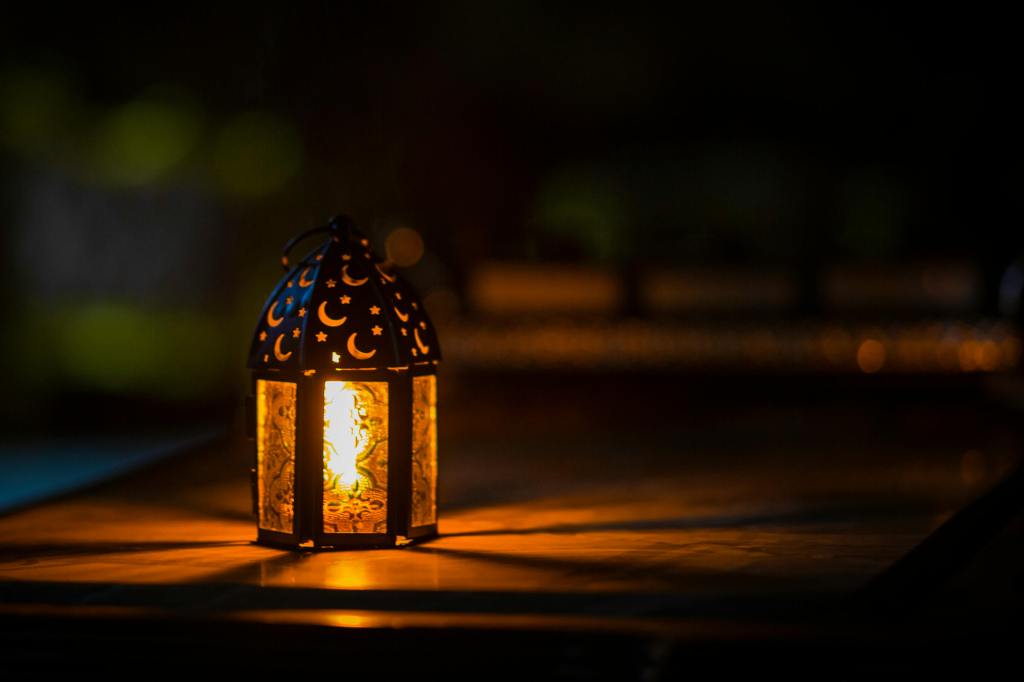
It was the night before Eid. Unlike other Chaand Raats, I was home, in my room, reading a book—completely unbothered by the Eid madness outside. But I couldn’t stay that way for long when Riya showed up.
“Abha, get up!” she said, bursting through the door.
“What for?” I was startled.
“What for?” she sighed loudly. Then she sat in a corner of my bed. “What for? Really? It’s Chaand Raat tonight. Let’s go to the rooftop. Don’t you want to see the moon?”
I snorted, “No.”
She then looked at me straight. “What’s wrong with you? You were never like this before.”
“People change, Riya,” I said, moving my attention back to my book.
“Don’t give me this ‘people change’ kinda bullshit, please.”
“What do you want?” I asked then.
Her face softened. “The things we always do—watching the moon, going out, getting ice cream, then putting on mehendi. Please, please, please let’s go. For the sake of your best friend?”
I almost laughed looking at her.
“Please, it’s our tradition. Don’t ditch the tradition for your heartbreak. Live a little,” she said.
I shrugged, “I’m living my life.”
“Waking up, going to work, then coming back home, shutting yourself inside your room for the rest of the day, only to repeat the same thing again the next day—is not living life,” she sighed.
“And going out on Chaand Raat is living life?” I quipped.
“Argh, you know what I meant,” she exasperated.
I finally put down my book, “Okay, baba. Only for you, my dear friend, I’m doing this.”
And this is the truth. If it wasn’t for her, I didn’t have any intention to celebrate Chaand Raat that year. But Riya was right—I was never like this before. Chaand Raat always meant a lot to me—watching the moon, putting on mehendi, going out with her, and then meeting Adnan, taking rickshaw rides with him—every year for the last three years. I looked at my best friend and decided that just because Adnan wasn’t a part of my life anymore, it wasn’t fair to deprive Riya of our usual tradition.
I then changed into a nice salwar kameez, drew eyeliner, dabbed red lipstick, brushed my hair, and grabbed Riya’s hand, “Let’s go.”
That evening was warm, as all the March evenings were, with a soft and calm breeze. I stood leaning against the railing—my eyes were searching the sky for the moon.
“There!” Riya said, pointing at a thin glowing curve almost hidden behind a gray cloud.
I smiled, spotting her. But my smile was wiped away as soon as I heard some voices from the next-door terrace. Despite trying my best not to look that way, I looked. I couldn’t help it—my eyes were then looking for Adnan among the crowd of boys there. We met on a Chaand Raat like that one. I was on my terrace, he was next door with his friends playing guitar… Our eyes met, and then the rest was like poetry written by a beautifully complex-minded poet.
“Wish he was there, na?” Hearing Riya, I moved my gaze away from them to her.
“Nah,” I lied. But she didn’t buy it, I knew.
We then took a rickshaw and went to the park a few blocks away. We’d heard there was a Chaand Raat festival going on—food, music, mehendi, and all. The park was all decked up with lights, ribbons, balloons, photo booths, and people—a lot of them. It seemed the entire neighborhood was there that night. Riya and I went straight to the ice cream van. After eating two scoops of ice cream, we went to the corner in the park where girls were putting on mehendi. Mehendi had never been my scene actually. I started wearing it three years back when I met Adnan—it was his favorite, and I then made it my favorite too.
As the mehendi artist drew the last stroke on my palm, I felt someone’s presence behind me.
“I’m glad that I didn’t take away all the colors from your life with me.” A cold wave pierced right through my heart like a frozen knife as I heard his deep, familiar voice. I stood up, turned around, and found him standing there, hands tucked inside his pockets, eyes on me.
For a moment, I forgot to breathe, forgot to move. I just kept watching him—his somber face, his honey eyes, that small scar on his left cheek that he got when he was little—he had told me that.
My heart screamed.
Run.
Stay.
“Hi!” I choked out.
“Hey!” He half smiled.
“Seems like someone’s wish came true,” Riya whispered near my ear.
Was seeing him tonight my wish? I guess it was. It had been my wish each and every night since the last time I saw him on a fateful afternoon a year ago.
“What are you doing here?” I asked Adnan.
“Not stalking you, that I can guarantee,” he replied with that half-smile of his, but miserably failed to smooth the edge of his voice. Or maybe he didn’t want to hide it at all.
“Of course not,” I murmured. How could I tell him that, despite everything, a part of me always wanted him not to give up on me as I did on us?
Then, I remembered, he did beg. He hadn’t just given up on us. He hadn’t simply left my hand amongst the cruel crowd.
It was me who got scared.
It was me who couldn’t take the heat.
It was me who was too cowardly to love boldly.
It was me who left.
“I’m just gonna grab a Coke. You guys talk,” and before I could stop Riya, she hurried away.
Then it was just him and me. Like the old times.
“When did you come back from London?” I started walking; he did too. I took a quick glance around us, checking for any questionable looks—it seemed like old habits hadn’t died.
“A week back.”
“For Eid?”
He nodded. “Yeah, for Eid.”
“How is everything at home?”
Rather than replying immediately, he paused, then said, “Good. Everyone’s fine.”
I couldn’t help but smirk.
“What?”
I looked at him. “What—what?”
He shook his head. “Nothing.”
A second or two passed. “So, what brought you here?” I asked. I wanted to know.
“Here? You mean in the park?”
“Yes,” I said.
“Not a girlfriend,” he said.
“I didn’t ask that,” I shrugged.
“Of course, you didn’t,” he said quietly, though he knew me too well not to realize I was really just trying to find out if he had someone in his life.
We kept walking, not looking at each other exactly, but somehow I figured he had been stealing glances because I had been doing it too.
“So, you put on mehendi?” he said, his gaze dropped to my henna. I looked at him then—he had a smile on his face—warm and soft like always.
I nodded and waited for him to say “show me,” as always. And to my surprise, he did say, “Show me.”
At first, I hesitated, though I was dying to show him my mehendi. Then I did—spreading my palms in front of him.
“It’s beautiful,” he said.
“Thanks.” Though I never said thanks before. I used to say—It’s for you.
“So, how’s life, Abha?” he asked.
I stopped myself from saying—I stopped living it. Rather, I replied, “As usual.”
“How’s London?” I asked him back.
He shrugged, said nothing.
It was then when we were crossing a bangle seller that he said, pointing at the basket full of bangles, “Do you want to buy a pair of bangles?” He used to buy me bangles—a lot of them.
I shook my head, “Nope.”
But he seemed like he didn’t hear what I just said. He walked towards the bangle seller and picked up a pair of olive-colored ones. “I guess this will go well with your Eid outfit.”
I then looked at him, my eyes wide—how did he know that my Eid outfit was olive? And then I remembered that I shared a photo of my Eid dress on my Instagram a few days ago. And he saw that. He still checked my updates.
He nodded, “Yeah, you guessed it right,” he said as if he could read my thoughts. “I saw your post on Insta.”
I moved my gaze back to my feet from him, only to look up at him again. “Why?”
He met my eyes—the sadness had returned—the same kind of sadness I saw in his eyes a year ago, the afternoon I told him to go away.
He took a step toward me, closing the gap some inches between us. “You think I just unloved you, na? Just like that?” While he said that, his eyes searched for something in mine. I looked away.
“You can’t simply wipe away someone from your mind. But I’d be lying if I said that I didn’t try,” he said then. Under the neon street lamp, his eyes looked glassy—he wasn’t looking at me anymore, he was looking elsewhere, trying his best not to meet my eyes. “I told myself I had moved on,” he said. “I whispered it to my heart over and over, hoping it would listen. I distracted myself, buried myself in new routines, new faces, new places, anything to erase the traces of you from my mind. And for a while, I thought it worked. I thought I had finally freed myself from the weight of your memories.” His voice croaked. Brushing his fingers through his dark, thick hair, he said then, “Then one day I heard this song in the street you always used to listen to. Just a few notes, and suddenly your face, your voice, the way you used to look at me all came flooding back, uninvited.”
He looked upward at the sky—it helps hold back tears, I read it somewhere.
Suddenly, I felt the urge to hold him tight and whisper in his ears, I’m not going anywhere. But I couldn’t. The whispers from our past got louder in my ears.
“She is older than you. Five years older than you!” his friends commented.
“Why would you marry someone older than you, when you have an option to marry someone younger than you?” his family questioned.
“You’ll regret it,” my mother had wept.
“You have disappointed us, Abha,” some of my friends remarked.
I always used to be the one squirming inside whenever we used to go out together. And then one day, I couldn’t take it anymore.
My insecurity got the best of me. I broke his heart and walked away—even though he never let a single insult thrown at me slide. He stood his ground and fought for me. But my insecurities were stronger than my love for him.
It seems that even after a year, not much had changed—his love for me hadn’t faded, and neither had my fears.
“I think I should go. It’s getting late,” I finally said as we reached the end of the walk and spotted Riya waiting at the park’s exit gate.
If I stayed any longer, I knew I’d spend weeks staring at the night sky, searching for answers to the question I couldn’t escape—why I fell for someone I couldn’t be with. I had been there before, and I didn’t want to go back.
“Can I walk you home?” he asked.
“You shouldn’t,” I replied.
He kept staring at me for a moment. “You know it only takes one ‘yes’ from you, and I’ll figure everything out.”
I felt tears rush to my eyes. This time, it was me who looked up at the sky and took a long, silent breath before closing my eyes. I saw the future— whispers, sideways glances, his family’s cold silence, my family’s disappointed face. The weight of it crushed it.
“I can’t,” I said, “I’m sorry that I’m not brave enough, Adnan. I’m sorry. Please forgive me.”
I didn’t wait after saying that. I walked away—for the second time—knowing he was watching me the whole time I remained in his line of sight.
And I didn’t look back.
My fear was still larger than my love.
ABOUT
Born and raised in the bustling capital of Bangladesh- Dhaka, Umme Pritam has been in love with reading since childhood, which eventually led her to write fiction. In 2022, she published her debut novel, Eiliyah, worldwide. The novel explored themes of love, loss, and self-discovery, and since its release, she has continued to write fiction that centers quiet emotional truths and complex interpersonal dynamics. She is currently working on her second novel: Far Away from the Madding Crowd.
Now based in Canada, she remains committed to writing stories that cross cultural and emotional borders. The enclosed story reflects her ongoing interest in characters navigating identity, vulnerability, and the intricate relationships that shape their lives.
When she is not writing, you’ll find her having deep, long conversations with her friends, reading books, and watching movies, or simply taking a long walk on the trail behind her house.
Her socials:
Instagram: https://www.instagram.com/umme.pritam?igsh=MXg5YWk4aHpxcWhtNQ==
Facebook page: https://www.facebook.com/UmmePritamAuthor/

Leave a comment