Written Author Interview
1. Tell us a bit about yourself. What sort of things do you enjoy doing outside of writing?
Travelling with my family is probably what I enjoy most. We love discovering places that combine culture, great food, and plenty of adventure — and we try to go somewhere meaningful at least once a year. Most recently we explored Copenhagen, which turned out to be a perfect setting to experience the magical world of Hans Christian Andersen, stroll through Tivoli Gardens, try Nordic specialties, and — of course — visit the home of LEGO. The year before, we were in Asia exploring Hong Kong, Vietnam, and Thailand. Every trip brings something unexpected, and those experiences often find their way into my writing in one way or another.
2. What is your most recent book about?
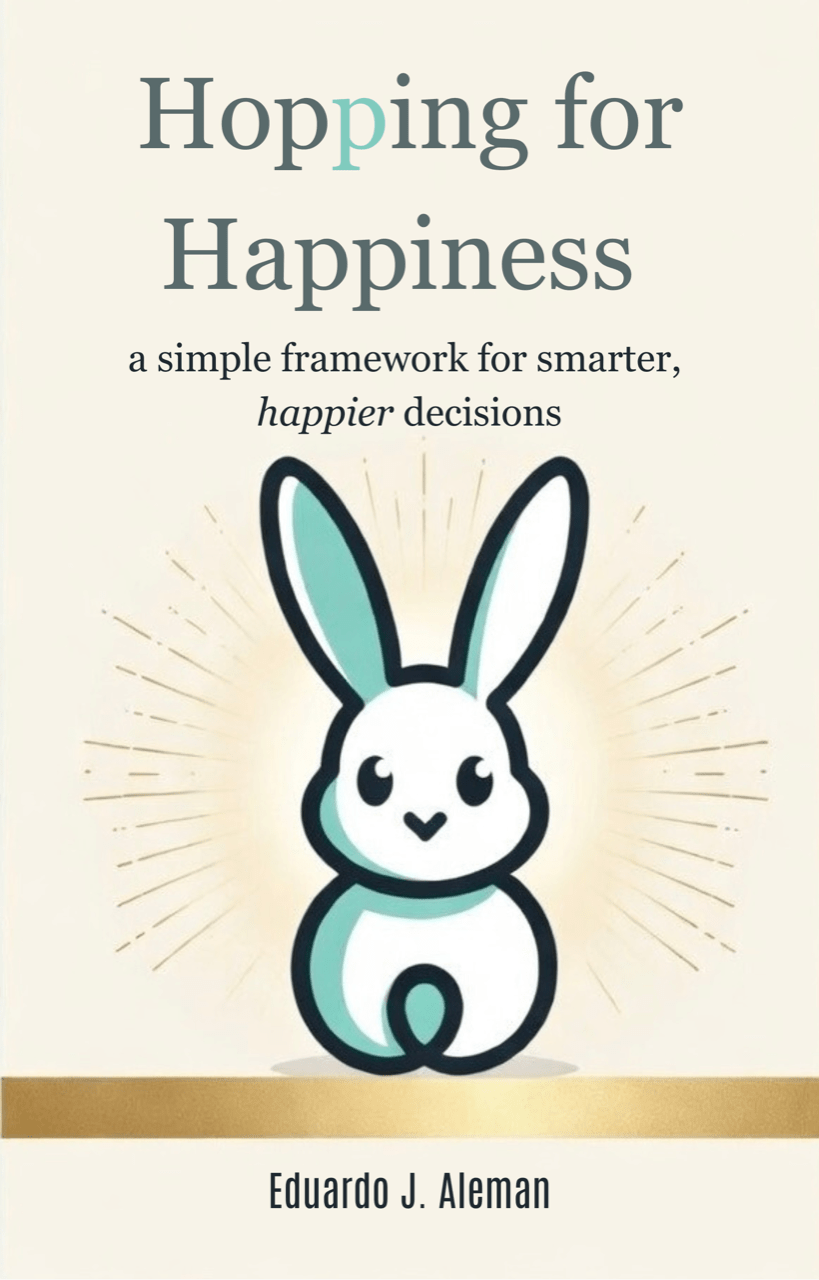
Hopping for Happiness is a practical self-help book that actually feels doable — which was the whole point. It started from a very personal place. As a father of two wonderful children, I found myself constantly asking whether the decisions I was making for them were the right ones. I was focused on all the right things: quality education, learning languages, healthy habits, exercise, good sleep. But the ultimate goal — happiness — felt impossible to measure. How would I know if I was doing it right? How could I make sure my decisions were leading somewhere meaningful?
The honest answer is: I can’t guarantee it. But I realized I needed a compass — a framework that could help me navigate those decisions with intention, and adjust course when something wasn’t working. That’s what the book offers: a structured, thoughtful approach to decision-making in the pursuit of a happier life, grounded in my years as a strategy consultant in Latin America and tested in the most demanding environment I know — parenthood.
3. If there was someone famous that you would recommend to read your book, who would it be?
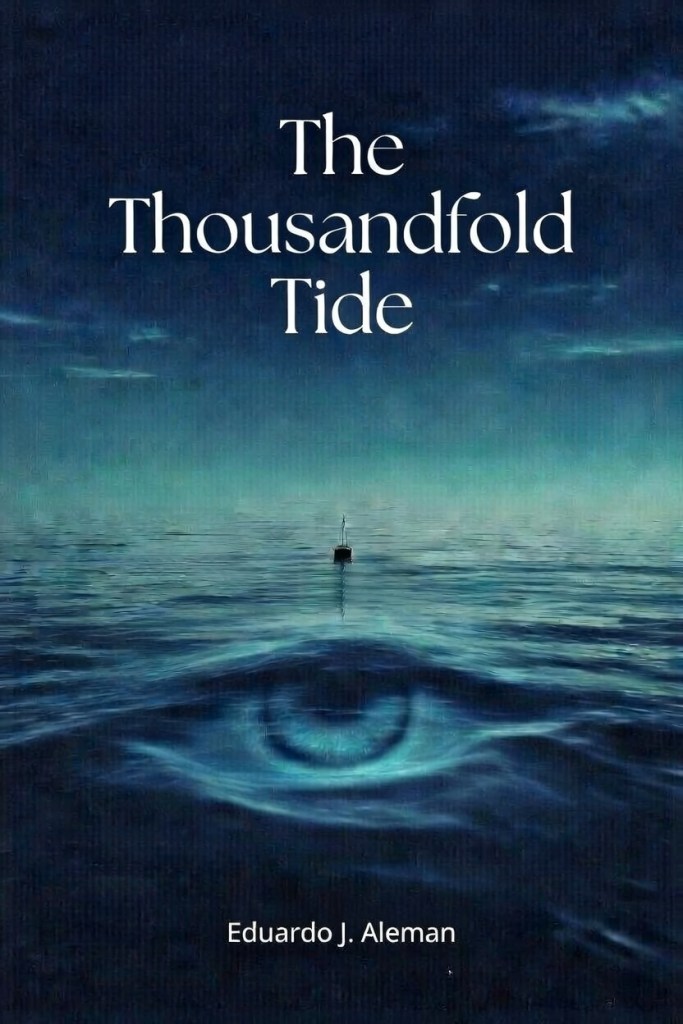
Jorge Luis Borges was a formative influence for me growing up. I encountered his work during high school, and it completely changed how I thought about storytelling — about surrealism, about layering meaning into language. After reading his anthology, I started exploring Dalí, and my ambition became to transmit those same feelings through words rather than images. Those early prose-poems eventually became the foundation for my fantasy novella, The Thousandfold Tide.
But there’s a funny story behind that book: I showed my poems to my ten-year-old daughter, and she told me she didn’t understand them. That moment was the spark. Rather than simplify the poems, I channelled the emotions and imagery behind them into a world she — and readers everywhere — could actually enter and experience. So in a way, she was the first editorial voice that shaped the book. I’d love to know what Borges would make of that process — turning surrealist poetry into an accessible YA fantasy.
4. Do you have a favourite spot you like to sit and write?
It’s less about a place and more about a particular state of mind — that threshold between wakefulness and sleep, when the mind is loose enough to wander but still present enough to catch something. Surrealist painters chased their oneiric visions and tried to fix them onto canvas; I try to do something similar with language.
That said, inspiration doesn’t always wait for the right moment. Sometimes a specific song or a sudden memory will trigger something, and when that happens, I reach for whatever is closest — a piece of paper, a notes app on my phone. The important thing is not to let it slip.
5. Did you experience any form of writer’s block while working on this piece? If so, what tips do you have for other authors that are struggling with writer’s block?
For The Thousandfold Tide, not really. It emerged organically from revisiting and reconnecting with my old poems — there was already an emotional engine running.
Hopping for Happiness was a different story. It took ages, because it started as a deeply personal quest without a clear ending in sight. I knew the decision-making framework I wanted to share — the one I had developed during my years as a strategy consultant in Latin America — but translating it into something readers could truly internalize proved to be harder than expected. At a certain point I realized that words alone weren’t enough. I needed to build something people could interact with.
So I learned vibe coding and developed an app called Happier Decisions, designed to complement the book and let readers actually play with the framework rather than just read about it. In a way, the writer’s block became a product. My advice to other authors: if you’re stuck, ask yourself whether the format is the problem. Sometimes the idea needs a different vessel.
6. What time of day is most productive for you to write?
The late evening, once the house is quiet — usually from around 10 PM to midnight. There’s something about that particular silence that opens things up. I try to set a hard stop at midnight, and if I haven’t finished a thought, I make sure to leave as many notes as possible so I can pick it back up the following day without losing the thread.
7. When you are writing, what are you typically listening to in the background? Silence? Favourite playlist? Podcast?
Music, always. I was a teenager in the nineties, so my taste is a bit of a time capsule — grunge, alternative, hard rock — but I also love jazz and bossa nova, which pull in a completely different emotional direction. Over time I’ve built a playlist I call Hidden Gems: a collection of songs I love that don’t always get the attention they deserve.
A few favourites from it: Summertime by Ella Fitzgerald and Louis Armstrong, Fly Me to the Moon as interpreted by Sinatra and Jobim, but also 4th of July by Soundgarden and Vasoline by Stone Temple Pilots. It’s an eclectic mix, but the emotional range of it maps closely to the different moods I write in.
8. Is there a particular scene or part in your book that you are incredibly proud of?
In The Thousandfold Tide, I’m particularly drawn to a literary technique I think of as “numeración infinita” — a kind of infinite enumeration, where you over-describe a feeling, an image, or a scene, layering detail upon detail in order to transport the reader completely into the emotional space you had in mind when you wrote it.
If I had to choose one passage I’m proud of, this would be in the top ten: “The water was still. Too still. And somewhere beneath it, something older than memory turned again — patient, inexorable, already certain she would come. She always did.”
There’s something in the rhythm of those sentences — the compression, the inevitability — that I feel captures the spirit of the whole book.
Follow and Connect with Eduardo J. Aleman
About
Eduardo J. Aleman writes practical self-help tools for 2 a.m. decisions (Hopping for Happiness with its Happier Decisions companion app) and lyrical YA fantasy that lingers like ocean mist (The Thousandfold Tide). Where self development meets fantasy.
Devoted family man who cherishes every moment spent with his loving wife and their two children. An avid traveler, he thrives on exploring new destinations, where he indulges his passion for grunge and jazz music, often discovering hidden gems in local scenes. His adventures are incomplete without a culinary quest, as he roams the world in search of delicious, authentic foods that tell stories of their origins. Whether hiking through European Alps, savoring street eats in Asia, or jamming to grunge classics or jazz beats on a road trip, Eduardo’s life is a vibrant blend of professional excellence and personal joy.
He holds an MBA, an MSc in Economics and Finance, and a background as a Production Engineer, Eduardo has further sharpened his expertise with executive education from the Wharton School. Speaking fluent Spanish, German, and English (plus decent Portuguese). A true global native, he handles any cultural context like a seasoned diplomat, drawing on life in Venezuela, the US, England, Germany, Singapore and Switzerland.
Social Media
- Instagram/Threads: @hoppingforhappiness.
- Amazon: https://www.amazon.com/author/eduardojaleman
- Goodreads: https://www.goodreads.com/author/show/62669081.Eduardo_J_Aleman


Leave a comment