One
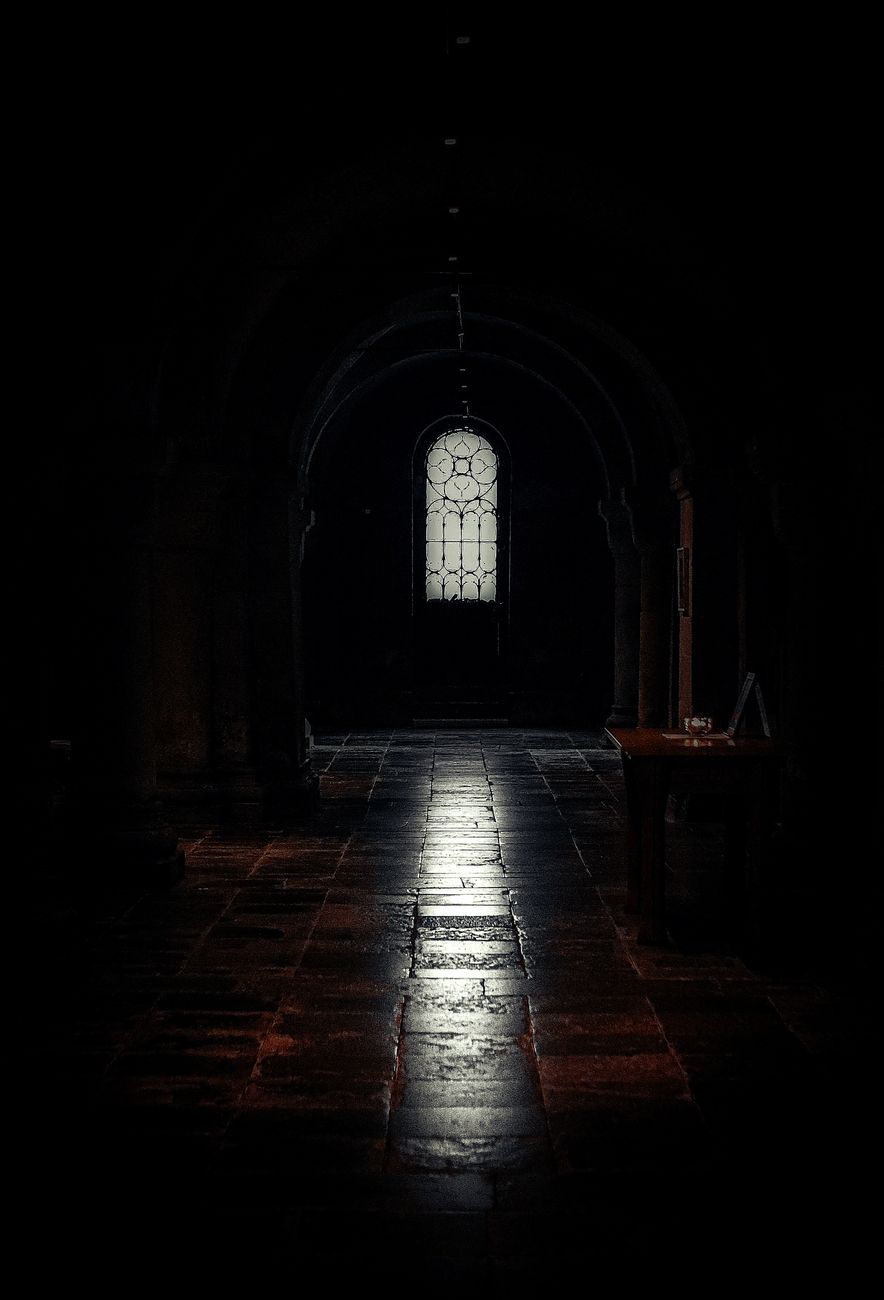
The group met in the crypt of St. Arnold’s, which had stopped being a church in 1984 and had never entirely stopped being a tomb.
I found this funny, that first night when we were all a bundle of nerves.
Six women who had each survived the worst night of their lives, sitting in a circle of plastic chairs on a carved stone floor, under vaulted arches sweating with damp, drinking tea and watery coffee from a church-hall urn. Somebody had hung fairy lights along the old stone shelves where the Arnold family had once kept its dead.
They did not help.
“It’s the only room the council would give us for free,” said Dr. Pascoe, as though reading my face. “And it has one door. Our members like one door.”
She was right. We did.
There were six of us that winter, seven with the doctor. Joan was the eldest, sixty-one, a survivor of the Candle killings in ’81, who knitted through every session and never dropped a stitch even when she spoke of the cellar.
Yvonne was a nineteen-year-old with a bleached fringe and a tremor in her left hand, the only living witness to what the papers called the Longstone Lake massacre. Susie had outlasted three of her sorority sisters and a thing that wore her housemother’s face. Betty, the youngest, still slept with the light on and said so without shame.
And then there were Lauren and Ashley, who had come to us in November, a fortnight apart, and who sat on opposite sides of the circle as though they had never met.
I am Julie. I am the girl from Hollow Lane. If you have seen the newspaper photograph, the one of me on the ambulance step with a silver blanket round my shoulders and my hands dark to the wrists, then you know all you need to know about me, and more than I would like.
The rules of the group were simple, and Dr. Pascoe recited them at the start of every session in a soft, unhurried voice, like a liturgy. We say what happened, not what we imagine. We take our time. We do not interrupt. And, last, the rule she called the oldest and the best:
“We name it to shrink it.”
Every week, each of us, in turn, said the name of the thing that had hunted us. The papers had given most of them names. Mine was the Lantern Man. Joan’s was the Candle Butcher. Yvonne’s was Old Longstone, though there had never been an Old Longstone, only a boy from the next county with a hatchet and a grudge. Susie’s was only ever “Mother.” Betty’s was a name that had been in every headline for a year, and she said it quickly, like a girl pulling off a plaster.
Lauren said hers last, always, and always the same way: a small, careful smile, a glance at the vaulted ceiling, and the words, “Oh, he’s gone. They always go.”
Ashley never said hers at all. She said, “I’m still thinking about how to put it.”
It took me weeks to notice that nobody ever pushed either of them.
Two
Joan told me about them in the car park, in the second week of December, with her knitting bag clutched to her chest and her breath standing in the air. Twinkling lights surrounding us like a spotlight.
“They go round,” she said. “Those two. They’re floaters.”
“Floaters?”
“Group-hoppers. You get them in every scene. Girls who can’t settle.” She lowered her voice, though the car park was empty. “Lauren was at the Saint Ronnek group in Leicester, before it folded. Then the Thursday one at Whitby. And Ashley, I’m nearly sure, was at Whitby too. Before that the Dunmow group. Before that…”
She stopped, and I saw her lips move, counting.
“Why did they fold?” I asked. “The groups.”
“Oh, you know how it is,” said Joan, with a vagueness that did not suit her. “People drift. People move away.” She patted my arm, once, and went to her car.
I drove home that night and told myself I would look it up. I did not. I was tired, and I was frightened of a number of things, and a rumour about two quiet women was not among the things I was prepared to add.
The news broke on Monday.
It was Betty who brought it, on her phone, her thumb shaking so badly the screen blurred. She held it out in the crypt, under the fairy lights, before Dr. Pascoe had even lit the urn.
“Read it,” she whispered. “Please. Somebody read it and tell me I’m wrong.”
The headline said that a lone hiker on the Longstone Lake path had found the old boathouse door standing open, and, inside, a hatchet in the rafters, wet.
Yvonne made a sound I had never heard a human being make.
Joan’s knitting needles stopped their repetition.
And Susie, beside me, very quietly said, “My housemother’s grave was dug up on Saturday. They’ve just told my mum.”
One by one we looked at one another.
Nobody said it.
Nobody needed to.
All of them, all of them at once, in the same week.
The Candle Butcher, whom I had thought rotting in Rampton since ’82.
Old Longstone, whom they said had hanged himself in a cell.
Mother.
The one in Betty’s headlines.
I felt the old, familiar thing climb up my spine, the thing that had lived in me since Hollow Lane, patient as damp.
“They’ve come back,” said Dr. Pascoe, and for the first time in all those Thursdays, her voice was not soft. “Every one of them.”
I looked around the circle for the last time that night in which I would think of it as a circle of friends.
Betty was crying.
Yvonne had her hand clamped over her mouth.
Susie had folded in on herself.
On the far side, Lauren was sitting perfectly still, hands in her lap, her eyes on the vaulted ceiling. And directly across from her, as if drawn by the same string, Ashley lifted her head, and for one second, no longer, the two of them looked at each other.
It was not the look of strangers.
It was the look of two people who had just heard a rehearsed line delivered well.
Three
We met on the following Thursday because none of us could bear not to.
Dr. Pascoe offered to cancel. She said so twice on the telephone, and the second time her voice cracked, and I understood that she was more frightened than any of us and had been for longer. But Susie said, “If we’re apart we’re dead,” and Yvonne said, “Alone is how it finds you,” and Betty said nothing at all, only turned up forty minutes early and sat on the crypt steps with her knees under her chin.
A police car waited in the lane until eight. Then its radio spoke, and it left.
Dr. Pascoe drew the bolts herself, top and bottom, and put the great iron key in her cardigan pocket and patted it like a pet. “One door,” she said, with a shaky smile.
No one laughed.
We sat. The urn ticked and sulked. Our phones lay face-down on the table by the stairs, because the crypt had no signal and because the rule was the rule, and because I think we all felt that a dead screen in a dead room would be worse company than none. Only Ashley kept hers, face-down on her knee, as she always did. “To think with,” she had said once.
Lauren had brought shortbread. She passed the tin around with her careful smile, and when her fingers brushed mine I caught a smell, sweet and chemical, like a plaster cast or a theatre dressing room. “Wardrobe and make-up,” she had told us in November, when Betty asked what she did. “Amateur dramatics. You’d be amazed what a person can do with latex and a bit of gum.”
Everyone had laughed at that, too. In November before the news released.
Dr. Pascoe recited the rules. We say what happened. We take our time. We name it to shrink it. Then she turned to Joan, and one by one we spoke the names, in the order we always did.
“The Candle Butcher,” said Joan, needles clicking. “Gone forty years. I’m not afraid of a dead man.”
“Old Longstone,” said Yvonne. “Who was never real. Who was never real.”
“Mother,” said Susie.
Betty said hers fast, a mumble of words I could barely understand.
Then it was my turn. I had been turning it over for three days, in my flat with every light on, and I must confess something here, because I promised honesty at the start and have not kept the whole of it.
On the Thursday after Joan’s warning in the car park, when Dr. Pascoe asked each of us for one detail the papers never printed, I told the group a lie. A small one. I said the Lantern Man hummed. That he walked the lane with the lantern swinging, humming a hymn, Dream A Little Dream Of Me, slow and soft, and that it was the humming that undid me far more than the blade.
He never made a sound. That was the whole horror of him: the lantern and the lane and the silence. I told the lie the way you leave a coin on a pavement, to see who bends for it. I told myself it was nothing. I told myself I was ashamed of how little I trusted them. I was not ashamed enough to stop.
“The Lantern Man,” I said now, in the crypt. “Gone.”
“Oh, he’s gone,” said Lauren, gently. “They always go.”
Ashley said she was still thinking.
It was then that the fairy lights failed.
They did not flicker. They went out all at once, with a small dry sound like a held breath letting go, and the dark in that crypt was the dark of a sealed jar. Somebody gasped. A chair scraped. Betty began to whimper, high and steady, like a kettle.
And out of the black, from the arch where the old book of the dead had been shelved and forgotten, came a sound I had waited for all my life and never once heard.
Humming.
Slow. Soft. A hymn. Dream A Little Dream Of Me.
A pale circle of light swung into being between the pillars, swaying, swaying, with the patient rhythm of a lantern on a bail. Beneath it, a pair of boots. Above it, a long coat.
The others screamed. I did not. The fear came, of course it came, it climbed my spine like water through a floor, but the thing that held me, the thing that went through me like a nail, was not terror.
It was recognition.
He had never hummed. I had made it up. A lie told to a circle of women on a Thursday, and here it walked in the dark, word-perfect, a coin picked up from the pavement and handed back to me.
The lights snapped on, all of them together, in a hard electric glare. The arch was empty. Joan’s chair lay on its side, and beside it a ball of bright red wool was rolling slowly across the stone, unspooling, into the dark.
I counted the circle. I could not help it. Betty. Susie. Yvonne. Ashley, perfectly still, her phone on her knee and her eyes on the ceiling. Dr. Pascoe, on her feet by the bolted door, the key in her fist.
Lauren’s chair was empty.
And so was Joan’s.
Four
We followed the ribbons of red wool.
It was Yvonne’s idea, and I will always count it among the bravest and stupidest things I have seen a person do. She took the red thread between her shaking fingers and went after it, and the rest of us followed in a hunch, under the arch and into the ossuary, where the Arnold bones had once been stacked like firewood and where now only the empty niches remained, row on row, like the pigeonholes of a dead post office.
Joan stood in the middle of the floor with her back to us. She was quite still. Her needles were up, one in each fist, in the posture of a woman who has waited forty years for one particular sound.
“Joan,” I whispered, too afraid to use my full voice.
“Not now, Julie,” she hissed quietly. “He’s here.”
He stepped out of the furthest niche as though the wall had given him up.
A tall figure in a grey apron stiff with old dark. A butcher’s cap. A face like tallow, flat and white and blank. In one gloved hand he carried a cleaver, and he did not hurry. He raised it and struck the flat of the blade against the stone, once, twice, three times: a bright, flat clanging, the Candle bell. It was the sound that had come down the cellar steps in 1981, and Joan had described it to us week upon week in the voice of a woman reading out a shopping list.
She did not scream. She simply stated, “You’re the wrong height,” and charged towards him.
I have thought a great deal about those needles. Eleven months of knitting through every session, ten inches of steel, sharpened by nothing but use. She drove one through the apron into the forearm of the thing that wore it, to the hilt, and the figure made a sound, a small, high, startled sound, and the cleaver came round.
The next few minutes went quickly. Our heavy breathing, the squelch of a needle into skin, Joan’s quiet anger. When it was done, Joan lay on the pale dust with the dark spreading out from her, and the figure stepped back into its niche and was gone, simply gone, as if the stone had taken it back.
I do not remember crossing the room. I remember her hand. It was clenched on something, and she pushed it into mine, and it was soft and warm and wrong: a strip of flesh-coloured skin, torn and curling, backed with a tacky sheen.
“Rubber,” Joan whispered. “It’s rubber, Julie. All of it. He was six foot four. This one was five foot six, in padding.” Her eyes slid past me to the dark. “I’ve been counting them. Since Monday.”
“Joan, who…”
But that was all. She had said what she had stayed alive to say.
Back in the crypt, Lauren was standing at the door of the little toilet cubicle in the corner, drying her hands on her skirt. “What on earth is going on?” she said. “I heard screaming. I was only gone a minute.”
I looked at her hands. I looked at the clean, pale, careful hands, and I put the strip of rubber into my pocket and said nothing at all. I do not know what kept me quiet. I think it was Joan’s voice in my head. Rubber.
Dr. Pascoe had the key out. She drew the bolts, top and bottom, with her whole body in it, and heaved, and the door did not so much as shiver in its frame.
“It’s barred,” she stated. “From the other side.”
Betty began to cry. Susie was praying under her breath, in a language I had not known she had. And Yvonne, who had followed the wool and found Joan and seen what the Butcher left, was the one who noticed: back in the ossuary, behind the last row of niches, a wall of old boards had been pulled away, and behind the boards, going up into the dark, was a flight of narrow steps. The splinters on the floor were pale and new.
“The sealed stair,” Pascoe whispered. “The council said it was bricked up. It goes to the vestry.”
“Someone’s opened it,” said Yvonne.
“Someone,” I paused, “has been getting in and out of this room for weeks.”
Nobody asked how I knew. We went up, all of us, in a line, in the dark, with Pascoe’s torch jittering ahead and the cold air coming down the steps to meet us, smelling of wax and rain.
I looked back once, to count. Ashley was last on the stair, her face bone-white in the glow, and in her hand, lit and cupped against her chest, was her phone.
There was no signal in the crypt. She was not calling anyone. The little red dot in the corner of the screen was the dot that means recording.
Five
The nave of St. Arnold’s was a ship of moonlight. Parts of the roof had gone, and the grey light fell in bars across the flagstones, and the pews had been dragged against the walls and stacked there like kindling for a larger fire. At the west end the great doors were chained. At the east, behind the altar rail, a small door stood a hand’s breadth ajar.
“Together,” said Dr. Pascoe. “We stay together, in sight of one another. That is the only rule that matters tonight.”
It lasted four minutes.
Yvonne broke first. She saw the padlock on the west doors, the size of her fist, and made a noise in her throat and ran for the font, where there was a narrow window she must have had in mind. I started after her. A hand caught my sleeve. Lauren’s.
“Don’t,” she breathed. “Julie, don’t. Stay with me.”
From the front came a wet, dragging sound, and then Yvonne’s voice, small and furious. “You’re not there. You were never there. You’re not…”
What answered her was a hatchet.
I saw it in the long bar of moonlight: a boy’s shape in a sodden anorak, a balaclava dripping, a trail of green weed hanging from one cuff. He lifted the axe in both hands, exactly as the papers said the boy from Longstone Lake had lifted it, and I heard a sound that will haunt my dreams forever, and then there was only the dripping from a hole that did not exist and the smell of lake water, in a church two hundred miles from any lake.
Ashley was not beside me. I had not seen her go. I looked round and she was coming back from the vestry door, quick and breathless, her phone pressed to her chest. “I thought I heard something at the side,” she whispered. “It’s locked.”
Lauren’s hand was still on my sleeve. She had not let go for a moment.
Just as our breathing began to calm down, Susie heard her mother.
The voice came from the vestry corridor, soft and warm and near: the voice of a woman at the foot of a staircase on a winter night. I had heard Susie do it once in the circle, in a flat dead whisper that made Joan put down her knitting.
“Girls? It’s gone ten. Cocoa’s on the stove. Come down, sweetheart, and nobody’s in trouble.”
“That’s Mother,” said Susie.
“It’s not,” I said. “Susie, listen to me. It’s a recording. It’s something somebody’s…”
But she had spent six years trying to un-hear that voice, and six years, God help her, wanting to. There is a part of every one of us that is still nine years old, standing at a bedroom door, waiting to be called down. The voice hummed, “Sweetheart? Come on, now,” and Susie went.
Through the gap in the vestry door I saw a soft pink cardigan, and above it a face that was kind and round and wrong, and then I saw nothing, because Ashley, who had been standing at my elbow for the whole of those seconds, had put her hand over my eyes.
“Don’t look,” she said. Her voice shook so hard I could hear her teeth. “Julie, don’t look.”
Ashley at my elbow. So it had been Lauren in the corridor. Lauren had slipped away from my sleeve, and I had not felt her go.
Dr. Pascoe was suddenly among us, white-faced, with the torch. “The vestry,” she gasped. “There’s an old line there, a telephone. Stay here. Don’t move. I’ll be two minutes.” She was gone before I could stop her, and I know now what she went to find.
Then there were three of us: Betty, Ashley, me.
Ashley said she would see if Pascoe needed help, and walked after her, and there were two. And then Lauren was beside us again, out of the dark behind the pulpit, her hair a little disarranged, her breath a little short, whispering, “There’s nothing at the side door. We’re trapped.”
The three of us crouched behind the pulpit. Betty was saying her name for it, over and over, in a whisper, to shrink it, the way we had been taught.
It came for her out of the north aisle: tall, black, silent. Betty screamed, and ran, and I was twenty yards from her. I could not have reached her. I have told myself that on a great many nights.
I did not run. Lauren’s hand was clamped around my wrist, hard and cold and sticky, and she had not left my side for one moment, and I did not need to count anymore.
Ashley was missing.
I tore my wrist out of Lauren’s hand. “I’ll find Pascoe,” I said, and ran for the vestry. Behind me I heard her walking, not hurrying.
Six
The vestry was a low, panelled room that smelled of wax and old wool. A brass hurricane lamp hung from a hook by the door, its glass dull with soot, and a tin of paraffin stood on the shelf below it. A stub of candle burned in a saucer on the long table in the middle, and by its light I saw that somebody had laid out the night’s costumes with care, the way you set out a meal.
A butcher’s cap and a stiff grey apron. A sodden balaclava trailing weed. A round, kind, rubber face on a polystyrene head, pinned to a pink cardigan. A black hood and coat, and a flat white face like tallow. Beside them lay a battery lantern, a speaker the size of a sandwich, a foam cleaver, a rubber hatchet, and a pot of something I knew by its smell.
Dr. Pascoe lay motionless in the doorway of the inner room with the large iron key still in her fist and blood trailing down her face. She had been killed with a brass candlestick, and she had died with her notebook open under her hand.
I took it. My hands shook too hard to hold it steady, and I read it anyway.
She had written in the small neat hand of a woman who has spent her life taking notes on the worst things that have happened to other people.
St. Ronnek, Leicester, 2019. Eight members. One survivor. Group folded. L.M. and A.T. both present.
Whitby, 2021. Seven members. One survivor. Group folded. L.M. and A.T. both present.
Dunmow, 2017. Six members. One survivor. Group folded. A.T. present. L.M. joined late; ask.
Below, underlined twice: Each time the killers “return.” Each time one girl leaves and does not come back. L. and A. never name their own. They don’t choose a group. They choose us.
And at the bottom, in a hand that had begun to run: I saw it in November. I told myself no one could be so patient.
On the table, beside the masks, Ashley’s phone lay face-up with the screen lit. A list of folders. ST RONNEK. WHITBY. DUNMOW. ST ARNOLD. I touched the last, and inside were files named by Thursday, and the newest of them was titled JULIE, HOLLOW LANE.
I pressed it. My own voice came out of the little speaker, high and unsteady. …and he hummed. That was the worst of it. He hummed “Dream A Little Dream Of Me,” and the lantern swung…
“Isn’t she good?” said Ashley, behind me. “I love that bit.”
She stood in the doorway in the black coat with the hood thrown back, her face flushed and bare, the white tallow mask hanging from one hand. Lauren stood just behind her, with the small, careful smile.
“He never hummed,” I said. My voice came out calm, to my surprise. “I lied. I made it up, to see who would pick it up. And someone hummed it back to me in the dark.”
“Yes,” said Lauren, with real pleasure. “I thought that was lovely. It’s the best thing anyone’s given us in years.”
“Why?”
It was Ashley who answered, because Ashley was the one who talked, I realized; Lauren had the hands, and Ashley had the voice. “Because you give us everything,” she said. “That’s what nobody tells you about a support group. You sit in a circle once a week with tea and biscuits, and you give us the name, and the sound, and the shoes, and what the floor felt like under your feet. We don’t have to remember a thing. You do it for us. You’ve been writing the script for a year, and you’ve been so careful, and so brave.”
“The boathouse took a weekend,” said Lauren, as though comparing notes. “The grave took me, a spade, and one very wet night. I’m not built for it. You should tell Susie I’m sorry about that.” She glanced at the dark beyond the doorway, and her smile faltered, only for a moment. “Well. I suppose you can’t, now.”
“The police car outside,” I said.
“A phone call about an accident on the Ripon road,” said Ashley. “A very upset woman. I do them well.”
“And Joan. And Yvonne. And Betty.”
“We did try to make it quick,” said Lauren, quite gently.
I think it was the gentleness that made me ask the only question I truly wanted answered. “What happened to you?”
They looked at each other, for the first time that night, properly, across the width of the room, and I saw that they were, in their way, quite in love.
“Dunmow,” said Lauren. “Two thousand and seventeen. A flat above a dentist’s. Two girls walked out of it at dawn, and the papers called one of us the survivor and the other the girl who found her, and the police asked us a great many times who had done it, and we told them the truth, which was that we weren’t sure.”
“We went to the group,” Ashley said, “because it was the only room that wanted us. And in that room, once a week, for an hour, the night came alive again. Do you know what it is to be the last girl, Julie? You do. For an hour a week you’re the most interesting person on earth. Everything you suffered means something. And then it’s over, and the others get better and stop coming, and the room goes grey. It’s unbearable.”
“So we help them remember,” said Lauren. “We bring the killers back. Who else would?”
“And one girl always walks out at dawn,” Ashley went on, “with the silver blanket and the stories, and she’s perfect. She carries it. She takes it to the next room and tells it again, and a new group has the shape it needs. That’s you. We always leave the witness.” She smiled, tired and almost shy. “It wouldn’t be a story otherwise.”
I was holding Pascoe’s notebook. In my pocket was Joan’s strip of rubber. And I was thinking, quite clearly, of a ball of red wool unspooling across a stone floor.
“You’ve made a mistake,” I state.
“Have we?”
“You showed me the table.”
I did not think about what I did next. I have never thought at the right moments; my body has always done it for me, and the papers call that courage, and it isn’t. I swept the tin of paraffin off the shelf with one arm, and the whole shining weight of it went over the table, over the rubber faces and the latex hands, the foam and the wigs, and I put the candle in after it.
Rubber burns the way a held breath leaves.
All. At. Once.
Seven
The flames lit up the panelling so fast I wasn’t prepared for it.
Lauren screamed. It was not a performer’s scream, and it was not a survivor’s; it was a thin, hoarse, bewildered cry, and she threw herself at the table with her bare hands, as though she could snatch a face out of the fire. The round, kind, rubber Mother had already begun to run, its soft features sliding off the polystyrene in a long slow tear.
Ashley had been closer. She stood between the table and the door, and the paraffin had caught the hem of her black coat, and she was beating at it with her mouth open and no sound coming out at all.
I did not help her. I stepped over the threshold, past Pascoe, past the key, past the notebook I was still—God knows why—holding, and I ran.
Behind me I heard Lauren say, in a voice I had never heard, ragged and plain, “Ashley. Ashley. Ashley.”
It was the first time either of them had said the other’s name all night.
I got out through the vestry’s side door, the one they had used so often that the frost on its step had worn to bare stone. The churchyard lay white under the thin moon, and the yews stood round it in their ranks, and behind me St. Arnold’s was burning with a soft, busy noise like paper.
I did not look back.
I reached the gate and sat down on the cold step and stayed there, with my hands in my lap, until the sirens came up the lane.
They gave me a silver blanket.
They sat me on the step of an ambulance.
A photographer from the county paper, who had been sleeping in his car at the foot of the lane since the news about Longstone Lake, found his angle quickly and took the picture.
They found Ashley in the vestry in the morning, or what the fire had left of her. They found Dr. Pascoe beside her, and Joan and Yvonne and Susie and Betty, each where we had lost them. They found a speaker and a lantern and a great many pots of spirit gum. They found Pascoe’s notebook, which I had handed to the first policeman who asked, and by the end of that week the newspapers had quoted it line by line.
What they did not find was Lauren.
The recordings had gone to ash with everything else. That was the one mercy of the night, and I have never been able to feel it as one.
In February I went to Whitby.
Joan had said it. They go round. If I was right, then somewhere in this country was a woman with careful hands and no one left to hum for her, and rooms like that crypt were the only kind of room she knew how to enter.
Someone had to be there when she came. Someone had to count.
The group met above a chip shop. Six chairs, a table with an urn, one door. A new doctor, younger than Pascoe and no less tired, read out the rules, and I said what happened, and I took my time, and I did not interrupt. When my turn came for the oldest and the best of them, I said, “The Lantern Man. And a girl called Lauren.”
There was a small silence. I knew it. I had sat on the other side of that silence for a year.
“Oh, he’s gone,” said someone across the circle, gently. “They always go.”
I looked up.
She was twenty, perhaps, with a bleached fringe and a careful smile, and her hands were folded in her lap, and I could not smell anything on them at all. On the far side of the circle sat another new girl, who said that she was still thinking about how to put it.
I have been to four groups since. Behind my back they have begun to say that I am a floater, that I go round. I let them say it. I keep my phone face-down on my knee and my hands where they can be seen. I count, and I wait my turn.
Because Joan was right about one thing, and I have not stopped thinking about it. It is never both at once. Someone has to sit in the circle, quiet and careful and above suspicion, while the other is out in the dark.
I have begun to wonder, on the long train rides between groups, which half of the pair I am.
The End
Follow and Connect with Steph J. Lucas
About
Steph J. Lucas is an avid reader and writer from the South of England. She lives in the middle of nowhere with her partner and their dog. Lucas primarily reads horror books and finds comfort within their stories.
Social Media

Leave a Reply