Growing up in a quiet suburb outside Dallas, Sarah learned early how to disappear.
At sixteen, she had perfected the art of how to move through hallways without drawing attention, how to lower her eyes when spoken to, how to make herself smaller so she wouldn’t be noticed. Her mother worked long hours and carried grief like a second spine, stiff and unbending. Her little brother, Jimmy, eleven and sharp as broken glass, made sport of Sarah’s silence.
Jimmy knew exactly how to hurt her without ever lifting a hand.
He would grin and “accidentally” spill his cereal across the kitchen floor, watching with satisfied eyes as their mother turned to Sarah and said, “Clean it up, Trudy,”—using her middle name, as if Sarah herself were a mess. Jimmy teased her relentlessly, calling her ugly, plain, and invisible. Over time, she half-believed him.
She wore her brown hair straight and unstyled, never daring to curl or color it. Makeup felt like a lie she wasn’t entitled to tell. Mirrors became negotiable enemies, and she glanced past them, never into them.
The only creature who truly saw her lived in her bedroom.
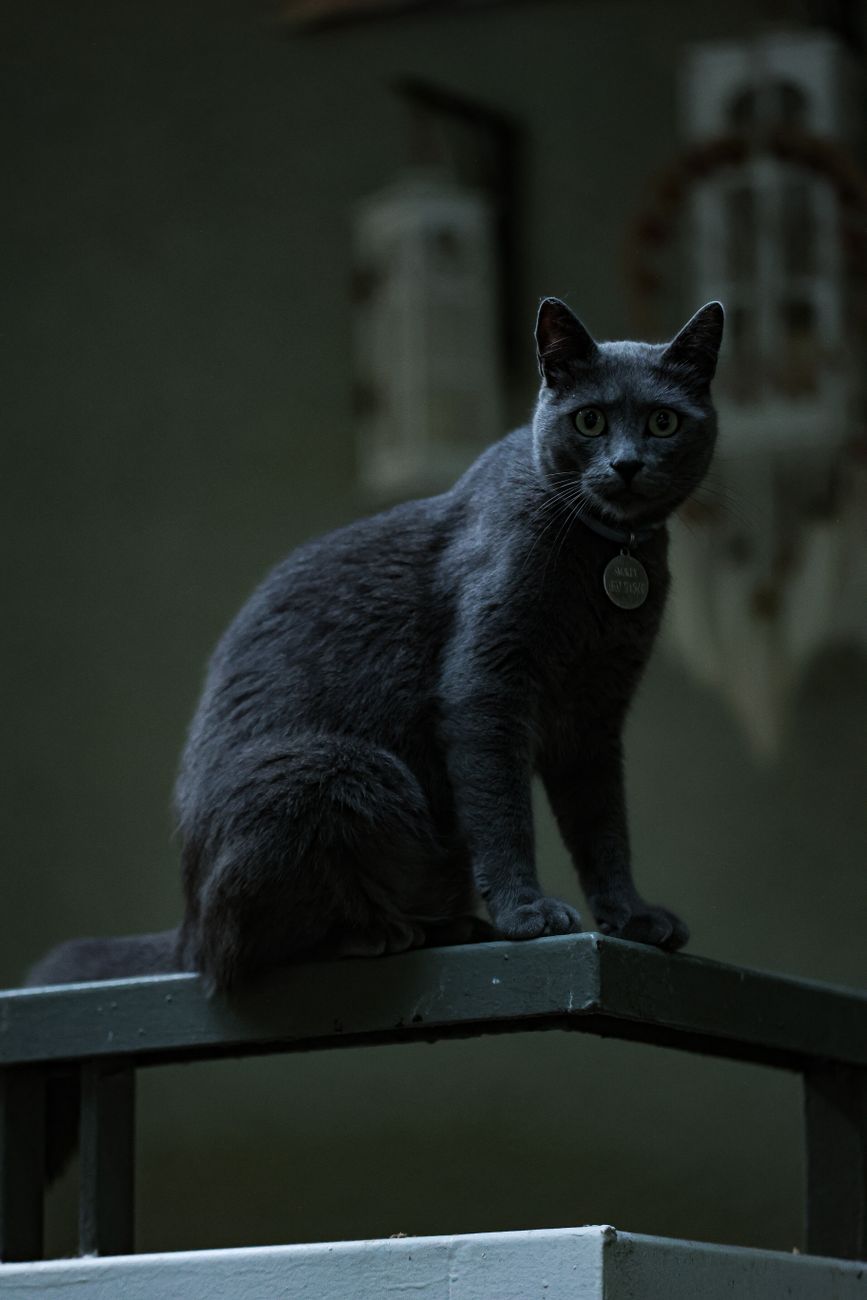
Whiskerine was a gray female cat with a pale stripe down her nose like a thumbprint from God. Sarah kept the litter box in her bathroom, fed her quietly, and loved her fiercely. At night, Whiskerine curled against Sarah’s ribs or nestled into the crook of her neck, purring like a motor that ran on comfort. Sarah whispered her secrets into that soft fur—her loneliness, her anger, her fear of becoming nothing. Whiskerine answered with slow blinks and gentle meows, as if understanding every word.
Jimmy hated the cat his sister got five years earlier.
He owned a police whistle and used it like a weapon, blowing it suddenly, shrill and piercing, sending Whiskerine scrambling under furniture, behind doors, into closets. He chased her through the house until she hid, trembling, and wouldn’t come out for hours.
Sarah begged her mother to make him stop.
“Boys will be boys,” her mother said, weary and distant, as if the phrase explained everything and absolved everyone.
Late at night, Sarah wondered if things would have been different if her father were still alive.
He had died falling from a roof at a construction site—an accident so ordinary it felt cruel. Sarah had been eight. Jimmy had been three. Her father used to call her his “little princess,” lifting her onto his shoulders, while calling Jimmy his “worry wart” when he thought no one was listening. When he died, the house seemed to cave inward. His absence was a hole no one patched.
A year later, at age nine, Whiskerine arrived, and some small piece of Sarah learned how to breathe again.
***
The afternoon everything broke, Sarah, age sixteen, was in the backyard tossing a feather taped to a stick for Whiskerine, laughing softly as the cat pounced with playful ferocity. Jimmy burst out of the house, whistle already screaming. Whiskerine bolted toward the trees, panic overtaking instinct.
Jimmy chased after her.
“Stop!” Sarah screamed, running after them. “Jimmy, stop!”
But the woods swallowed them both.
Jimmy returned, but Whiskerine seemed to have vanished.
Under darkening clouds and light rain, Sarah searched until dark, calling, “Whiskerine, where are you?” until her throat burned raw. She pictured her cat, dripping wet, curled up against a tree base, scared and meowing for her mistress. She wouldn’t have left even then, but without a flashlight, it was useless.
She returned every day after school, combing the forest, whispering apologies into the trees. They assumed a fox or a coyote had taken her. Logic offered no comfort.
For months afterward, Sarah patted the empty spot on her pillow, waiting for a warmth that never came. Tears soaked into fabric meant for purring. Something inside her hardened toward her brother and never fully softened again.
She confessed her hatred to the minister after church one Sunday, hands shaking as she spoke. They talked for weeks. Forgiveness, she learned, wasn’t forgetting—it was surviving without poisoning yourself.
College was her escape.
A scholarship took her away from the house that made her feel inadequate. She struggled academically, lost the scholarship, transferred to a business college, learned administration assistant skills, and believed it was all she deserved. She waited tables at a bar, rented a cramped two-bedroom apartment, and lived paycheck to paycheck. Sarah thought about a cat for company, but decided she’d be away too much, but that was only the superficial reason to decide against the idea.
She met Renard at the bar—a guitar-playing drifter with kind eyes and unstable footing. Friendship turned into convenience, and he moved into Sarah’s apartment, promising to split all the expenses, which he did… sometimes. Soon after, the friendship turned into occasional sex, which neither of them mistook for love. It was warmth, not fire.
Then came the Dallas freeway on their way to work at the bar.
Traffic slowed ahead of them when the explosion happened—metal screaming, flames blooming like a nightmare flower. One car burned openly; another had slammed into it. A woman appeared pinned inside. A baby waved tiny arms in the back seat.
Renard ran away from the fire, as did others.
Sarah did not.
She grabbed the ancient fire extinguisher from her trunk, hands shaking as adrenaline drowned fear. A large man appeared beside her, wordless, fearless. Together they sprayed back the flames just long enough—Sarah freeing the baby, the man wrenching the mother loose.
He ran to a safe spot and propped up the half-conscious woman against the guardrail. Sarah arrived just behind him. The mother grabbed her baby. Moments later, the cars exploded.
The man vanished into the crowd.
The media hailed Sarah as a hero.
Her picture appeared in the paper, standing beside the recovering mother and baby at the hospital. Sarah tried to credit the man who helped her, but no one remembered him. The mother had been too dazed.
But Sarah remembered.
Two weeks later, as she left work, he stood waiting.
Bob Edger.
A retired Marine. A private investigator. He explained his disappearance with quiet humility—and a practical concern about talking to police after a couple of beers.
“You didn’t smell like alcohol to me,” Sarah said. “You resembled a miracle and smelled like aftershave.”
“Whatever,” he said. “Private investigators need to stay private and avoid publicity. But I sure admired your courage. You were the only other person going to that woman and child’s aid. And the softness about you.”
Sarah noticed how smoothly he changed the subject from himself to her, and it pleased her.
“Wanna join me for lunch… get to know each other better?” he said.
His broad smile, showing those white teeth in a square jawline, made his offer impossible to resist.
“I’d love that.”
At lunch, Sarah learned what made this quiet hero tick. He saw too many buddies die in battle. Perhaps that played a part in how he liked helping people find missing loved ones.
Sarah would have kicked Renard out of the apartment by now for not paying any rent, but he got a road-tour gig, and that was a perfect time for him to leave permanently.
One lunch with Bob turned into many dinners, Sunday walks in the park, feeding the ducks and squirrels, and once a gray striped cat chased some pigeons, and Bob didn’t understand Sarah’s demeanor, putting her hands to her face and uttering an audible sigh.
“I thought all young women liked kitty cats. What’s wrong?”
“Actually, I do. But it’s a long story.”
He took her hand in his. “Please. Tell me.”
And she did.
When finished, Bob gave her a hug that spread warmth throughout her body. She was glad he was so understanding about the happy times, and then the sad ending to that part of her life when she lost Whiskerine.
They continued to see each other more often. Bob took her to his home in the suburbs for a lovely catered dinner.
Sarah visited a cosmetic store and took lessons on makeup, had her hair styled at a fancy salon, and bought a few new dresses revealing more skin. The compliments she received felt like a lovely spring day, and she relished the sensation.
Bob absolutely noticed. “You were perfect to begin with, and now you look stunning.”
At Christmas, she introduced Bob to her family. Her mother was bubbly and joyful and called her Sweetie and served the family a delicious turkey dinner. Brother Jimmy finally spoke the truth he’d carried since childhood—that he believed that somehow, Sarah had caused their father’s fall. That he’d hated her for surviving.
They cried. He said he had been stupid and now regretted how he had treated his sister. She forgave him everything in the past, except that she couldn’t quite forget the Whiskerine tragedy.
To improve Sarah’s outlook further, Bob proposed with a diamond ring right after they’d exchanged passionate kisses on New Year’s Eve. They set the date for Valentine’s Day.
The next morning at her apartment, as an engagement and New Year’s gift, he gave her a gray kitten. It didn’t have a white spot on its forehead, but otherwise was a lot like her other cat, except this was a male.
“He needed you,” Bob said. And he gently put the kitty in her arms.
Sarah held him close, tears pooling in her eyes, feeling something old and lost come home.
“I feel more complete again than I have in a long time, having shied away from getting a new cat, fearing the memory of her would cause me too much pain. I don’t feel that now.”
A tear trickled down her cheek as she inhaled through her nose.
Scratching its chin while it purred loudly, she noticed its unusually long white whiskers and eyebrows. “I believe I’m calling you Whiskers,” she sniffed again as she held it in front of her face.
The cat gave a soft ‘meow’ then licked her nose with its rough tongue, and they laughed. Bob put his arms around both of them and gave a gentle squeeze. For Sarah, it was the best feeling she could remember, and she confidently looked forward to a lot more.
Follow and Connect with M.D. Smith IV
About
M.D. Smith of Huntsville, Alabama, writer of over 350 flash stories, has published digitally in Frontier Times, Flash Fiction Magazine, Bewilderingstories.com, and many more. Retired from running a television station, he lives with his wife of 64 years, and three cats.
Social Media


Leave a comment