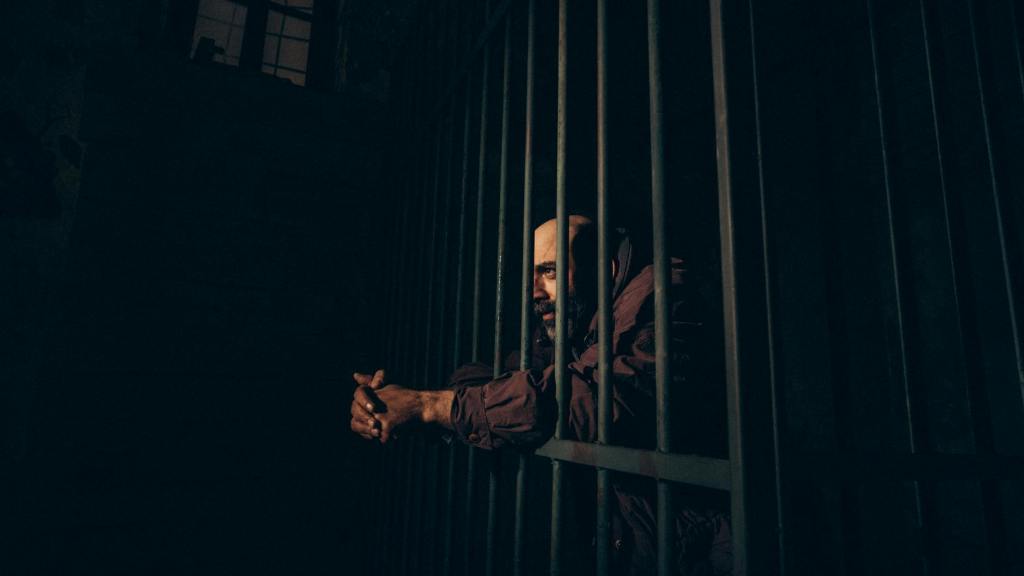
The wind howled through the cracked glass of the lantern room, carrying the salt sting of the sea into the belly of the old lighthouse.
Koehn sat on the cold stone floor, knees drawn to his chest, staring at the same patch of wall he had memorized eight years ago.
The river had taken everything that night, not the gentle stream that fed the harbor, but the merciless surge of the storm swell that dragged his wife and daughter screaming into the dark.
He had stopped counting the days long ago. Time had become nothing but another warden. Dust coated the iron stairs like gray snow.
Empty bottles stood in silent rows along the curved wall, each one a monument to nights when the memories grew teeth. He rarely spoke anymore.
The sound of his own voice felt like betrayal, as if uttering words might somehow lessen the weight of what he had lost. Instead he listened to the gulls and the endless percussion of waves against rock, letting the noise fill the hollow places inside him.
Morning light pierced the grime on the windows, painting pale stripes across his unshaven face. Koehn rose slowly, joints protesting, and shuffled to the small stove in the corner. The kettle whistled its thin complaint as he boiled water for the bitter coffee that was his only ritual.
He drank it black, scalding, as if the burn could remind him he was still flesh and blood.
Outside, the sky had turned the color of a fresh bruise. A storm was gathering, the kind that made the old tower groan and sway like a drunkard. Koehn watched the clouds through the salt-streaked glass, feeling nothing.
Hope had died with them. What remained was simply endurance, a stubborn refusal to follow his family into the water. He had not seen another living soul in months.
The townspeople had given up on the hermit in the lighthouse years ago. Good, he thought. Their pity was worse than solitude.
A violent gust slammed against the tower, rattling the iron door at the base. Then came the sound, sharp and unmistakable, of someone pounding on the metal with desperate fists. Koehn froze, cup halfway to his lips.
The knocking continued, frantic now, a voice barely audible above the wind crying out for help. For the first time in eight years, something other than grief stirred in his chest. It felt dangerously like fear.
Or maybe the first faint tremor of something worse.
The pounding grew louder, each blow vibrating up through the iron stairs like a heartbeat he no longer recognized as his own.
Koehn set the cup down with trembling hands, the bitter coffee sloshing over the rim. He told himself it was only the wind playing tricks, that no one would be foolish enough to seek shelter here.
Yet the voice outside fractured into a woman’s cry, raw and desperate, cutting through the storm’s roar. He descended the spiral steps slowly, each footfall heavy with eight years of disuse. The iron door at the base shuddered under another assault.
When he finally slid the rusted bolt free, the wind nearly tore the door from his grip. Rain lashed in sideways, soaking him instantly.
There she stood, a drenched figure clinging to the frame, dark hair plastered across a face pale with exhaustion.
Blood trickled from a gash above her eyebrow, mixing with seawater. “Please,” she gasped, her voice hoarse.
“My boat… the rocks…” Koehn stared at her, the stranger’s presence ripping open something inside him he had long cauterized.
She was young, perhaps thirty, with wide green eyes that reminded him too sharply of his daughter’s. The similarity struck him like a physical blow. For a moment he considered slamming the door, returning to his tomb of silence.
Instead, his arm moved without permission, pulling her inside. The storm swallowed the world behind them as he forced the door shut.
Water pooled at their feet, dark and shimmering. She shivered violently, arms wrapped around herself, and when she looked up at him, there was no pity in her gaze, only raw survival.
That absence of judgment unsettled him more than any sympathetic glance ever had.
“You shouldn’t be here,” he muttered, the sound of his own voice strange and gravel-rough after so long unused.
The words tasted like rust. Yet, even as he spoke them, he was already moving toward the stairs, gesturing for her to follow.
Hope, that treacherous bastard, had found a crack in his walls. And Koehn feared, with a dread deeper than any grief, that it might not let him remain its prisoner much longer.
When the storm finally broke, it did so with a sound less like a scream and more like a sigh. Koehn’s hands, raw and trembling, coaxed the stranger toward the narrow stairwell, the iron steps groaning beneath the weight of two lives that had been forced together by a single, indifferent wave.
The lantern, long dark and dust-caked, flickered to life as a stray gust of wind rattled the glass panes and sent a thin line of oil-soaked wick blazing against the blackness.
For the first time in eight years the beam cut cleanly across the churning sea, a thin, steady finger pointing toward safety.
The woman—her hair a wild halo of sea-foam, her eyes fierce with the same green that had once watched him tuck a toy boat into his daughter’s hands—collapsed onto the floor, shivering not just from cold but from the sudden flood of memories that surged through her. “I’m… I’m Tamara,” she whispered, the name slipping out like a prayer. “Your sister. I was on the rescue crew; the boat capsized when we tried to pull the lighthouse’s lantern back into service. I thought I’d never find you again.”
In that breath, the weight of eight years of self-imposed exile cracked open, and a torrent of grief, guilt, and an unexpected, fierce relief surged through Koehn.
He stood, a wraith no longer, and wrapped his arms around the sister he had imagined dying with their mother. Their embrace was clumsy, damp, and terrified, but it was alive.
Outside, the tempest roared its final chorus, but the lighthouse’s light now pulsed a steady rhythm, a promise that the darkness could be pierced.
The townspeople, hearing the blast of the horn and seeing the luminous arc sweep across the harbor, scrambled to the cliffs, their lanterns trembling in the gale.
They found the tower’s door ajar, the iron bolt twisted loose, and inside, two silhouettes huddled together, their breaths syncing with the ticking of the lantern.
As the first rays of dawn peeled back the bruised clouds, the sea calmed, and the water that had once stolen everything now reflected a glimmer of redemption.
Koehn, once a prisoner of his own sorrow, felt the iron bars of grief dissolve into the salty air. He realized that endurance without hope was merely a slow surrender; the act of opening the door—of letting another in—had unlocked his own cage.
The lighthouse, long a monument to loss, became a beacon once more, not just for ships but for the wounded hearts that dared to step back into the world.
In the quiet after the storm, the sound that filled the tower was no longer the endless percussion of waves, but the soft, steady murmur of two siblings speaking the names they had kept in their throats for too long, and the faint, hopeful hum of a life that could finally begin again.
Follow and Connect with Plamen V.
About
Plamen V. is an award-winning freelance writer/poet with published works online and in a dozen US and UK literary magazines. They been writing since they were ten, and has won numerous writing contests and received awards from different parts of the world.
A creative person with big dreams that loves to help people. They have Certificates on Creative Writing from the UK writing centre, from the Open University in Scotland, Oxford Study Centre, Eduta.com/Novel Writing course/ and from Harvard University.


Leave a comment