“To the sand eaters, we won’t have you tumbling into our duggendomes with your
nillywigh float’n’scroat and a’tramping in Our’Green’ways, night or digh, noon or non, for the
Punishments be sure sot down. Green Be!” said the cracked and swollen sign outside of a
dark hole with no bottom in sight.
“This looken be an oldo,” muttered Linkin, who scribbled a five point shape beside an arc into his notebook and looked out across the rolling sand hills.
Linkin was a 12th generation mapmaker, he told all he met, a traveler marking the odds and ends found in the endless earth that was now a sand box, a dust blown forever, the Home of the Hills. His people made maps before the droughts, before the lands dried up and soil turned from black to brown to tan to sand, and the last of his line above ground, he continued to map an endlessly shifting landscape that changed contour with every moment. For whom, he wasn’t sure, but he did it anyway.
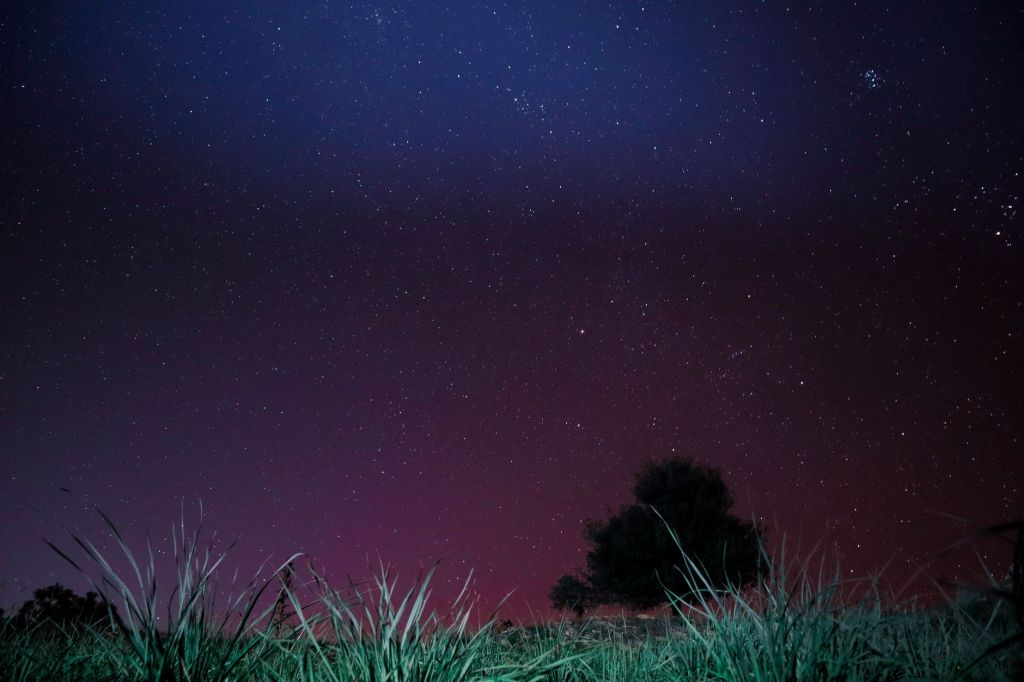
Linkin sat next to the sign and stared up at the sky, searching for early evening stars. His cheeks were a shade darker and his beard a shade lighter from all his studies of the many faced sky, but it was a fascinating find for Linkin, and he wanted to map it perfectly, and only the sky could provide a mark. The sign itself had languages no Graver now spoke, but it was certainly written by one, maybe 5 generations ago, he speculated.
Only a Graver would be protective of a dark hole; it was all they had. Holes, tunnels, pathways, entryways, crude dugouts, a life most dank, eked out in a state of continuous toil. Linkin considered jumping down into the hole but the last time, he was cornered by some snarling Gravers. He held no ill will for them, as they were once the same; he had family who turned Graver and no doubt gave birth to more, but time underground changes a body, clouds their mind, their speech, their sense of well-doing. The thought frightened him, not to mention the smell. It reminded him of burnt and decaying blood beetle.
It wasn’t their fault though. Most began to sleep underground to avoid the whipping wind, “the roaring night demon, MouthFrother,” they called it. While many tried to build upward, the wind (that continuous coursing scream from the heavens) dashed any construction and left dunes in its path. So dug down they did, deep into the ground, building within the Home of the Hills, and all interaction with the outside world slowly disappeared.
Besides Linkin, there were a few others that could not stomach life under the hills. The smell of the dugouts was terrible, the echoing of the nightwind pierced their ears, and to them, sleep inside resembled death in a grave. They would stay up all night huddled together in the face of the wind, interlocked arms and legs as a block, and sleep a bit once the Sun burnt off the night wind. They were a resilient people, of whom Linkin called himself one, beaten down by wind, which howled in their ears and burnt their skin, and were tortured by the Sun’s heat of the day. But they were proud. They weren’t no Gravers, mudstuck, dirtstank sleepers in tunnels. No, they were the WindBlown.
“The WindBlown, survivors of the night.
The WindBlown, windfliers, coasters, talers, and talkers.
The WindBlown, changers, freelifers, makers of wind,” they would sing.
“This spot is of historic import,” Linkin declared to no one in particular, “because it shows what we were and what we are.” Linkin was proud of his position within the WindBlown, and would take stock of their aboveground world, and upon his return tell his friends of the artifacts he found, where the sun made it hottest and unbearable, where the dunes collided and formed two smiling faces, and where your voice could travel and echo back to you time and time again. They’d be able to find these places and more, if they ever read his maps.
But many ceased to care after the retreat of the Green. It was a vast stretch of sandy nothing to them. And oftentimes, the WindBlown would curse their life above ground, most despairingly, because Green was no longer in sight in the Home of the Hills. Green once covered the Home of the Hills, from end to end. It was their inspiration, their livelihoods, the fabric of their homes. After the retreat of the Green, they remembered Green. Remembered it in their mind, in their nose, in their palms, in their face so radiant, longing for anything besides the dry and coarse grains of sand that permeated every crag and cranny of their existence. Talked of Green often.
Soon though, Gravers and WindBlown lost their sense for all things Green. Green became a different word, as did grass, as did life. Green became an expression like hello, or beautiful, an approval, or an admission of the heart. It no longer conjured images of things green, but rather images of objects not the color green, but green felt. Green became everything, and Green was all, but it wasn’t natureborn green, just a word.
The absence of Green made a pitiable soul of Gravers and WindBlown alike.
Linkin peered over the hole and sniffed. Spleeny, he thought, and lamented the Gravers poor fate. He was old enough to know some Gravers before they lost their hearing. The ghastly screeching in the tunnels made soft puddley edges of their ear drums. And then their vocabulary decreased.
As a mapmaker he tried to stay in touch with the new world being built underground, but the Gravers lost their words, until finally they only spoke of Green. The speech between them was the talk of Green, a short, staccato conversation that Linkin never caught ahold, gruntal, humpal, a dissection of Green, or a rephrasing of Green, greehareheneenaannéereenan. All utterances for the purpose of toil, more digging, more alleyways, deeper underground dugouts, digging to flee the screeching of the wind, day and night, and then digging because that’s all there was to do.
‘Green’ had gone full circle, from a living breathing object in life, to a memory, to a joyous expression, to a currency for work, a transactual utterance devoid of feeling with no relation to natural green life. Before long the Gravers never left their dugout maze, their everything samesafe, and slowly the WindBlown retreated from all interaction with the Gravers, and despised the simplicity of the word Green and all of its kind, forgetting that Green was once real.
Linkin unraveled the leather ties around his pants and boots, and unrolled the flaps covering his feet. He stuffed his notebook inside and tied them back up. He was considering a little lie down before the wind picked up, and took a stretch and a yawn and a whelp, when out from the hole popped a sandy head, saying, “Greeheeheeheehreen, sir.”
Linkin started with a hop and jumped to his feet. “Thomdun, you scared the sand out of me!”
A cloud of sand billowed around his head, a halo in this diminishing light. Thomdun immediately reached for Linkin’s beard and embraced him into his arms. He was slapping his back, which clouded more sand and dust into the air, and pawed at Linkin’s beard, saying, “Karto, Karto,” a name he had for Linkin. They were both coughing.
“Thomdun, come on!” Linkin exclaimed.
“Excited to seen you, maker of maps,” Thomdun said. Thomdun was always excited to see anyone. He was one of the only WindBlown who passed between Gravers during the day, and no one seemed to mind. He had an open mouthed laughter, that crossed all barriers of type and kind, and could befriend a sand wall if need be. He was only ever embarrassed when he introduced himself anew to those he already met. He’d go dead quiet until someone yanked on his beard, and he’d feel comfortable again. He had a wonderful smile and so he was well known and remembered.
But for the life of Linkin, he had no idea how Thomdun handled the breamy underground smell.
“What do we do here,” Thomdun asked.
“If you must know, I was to sleep a bit, fore I join the others.”
“No time. Swoopswoop, down it comes,” Thomdun said, referring to the wind.
“Yes, you’re righten.”
“Sinken-sand!”
“Sinken-sand,” Linkin agreed.
And they set off to meet the others, as the wind began to whistle.
Of the WindBlown there was a Charlie there, and a Sandy, a Joseph who blinked too much, a Kelley who smiled too much, and Linkin with his loud mouth; there was Emile, Laurick, Thomdun with his laugh; Polly, whose mother taught her to tweet, but she could no longer remember how; Solto knew secrets he told no one, but would run off at night and whisper them into the wind, hoping they would catch ahold of the stream and someone, somewhere, somehow, would know the secrets of all; and Shirl, so quiet and small they forgot she was there, so quiet and small she could put herself in her own pocket, always head down, drawing lines on herself; but when she did look up, their faces would a’light, for some reflection unknown was always burning up her pupils.
These folks, and others, were the WindBlown, huddled and crosslegged dots forming constellations along the Home of the Hills. Campsites against the brunt of the mighty wind.
Linkin and Thomdun joined them, with Thomdun embracing all, each and individually with a hearty hug, a beard yank or a hair pull, while Linkin waved rapidly and dropped into the circle. Last night had been a tough wind, and some considered an alternative formation tonight.
“Surely you notten thinken it’s better any now?” asked Laurick who shifted his crossed legs to straight. He was stretching before the wind came.
“Nope’n’better, sure,” said Emile. “My knees done cracken and my bows bellowen after nighlas, and it turnen me bluen in the belly.”
“Ay, bluen,” Kelley said, with a sad smile.
“From the other side it swept us nighlas, no tellen which way to comen’forthen,” said Joseph, blinking.
“I’m sayen we locken nigh,” Charlie was always sure, if they interlocked arms they’d withstand the wind.
“Laslock harten,” recollected Polly, who ended in hard sand the night before.
“Harten it deed,” agreed Emile, shaking her elbows.
“But somes locken stoppen the wind, like nighlasnigh, or one before?” said Laurick.
“Before darnigh,” said Polly.
“Were not. Was nighlasnigh!” said Charlie.
“Whichen were it then?” asked Joseph.
“Solto’s sos’d to memeren!” said Laurick.
“Solto, No!” said deep-throated Solto. He had many more things on his mind.
And they’d carry on determining when the interlocking formation worked last, and whether it was worth the trouble. They finally decided to interlock, as the wind started to sing, and Linkin told them of the sign he found, and how he could date it to the 5th generation of Gravers, and how it helped him to recollect a song, which he recited with the wind.
“Say Hiiiiiii, Nilly Wiiiiigh,
Say Hiiiiiii, Nilly Wiiiiigh,
You can’t hide from the silence
in our world,
You can’t tame the blaze
all around,
Say Hiiiiiii, Nilly Wiiiiigh,
Say Hiiiiiii, Nilly Wiiiiigh,
You can’t mine all the diamonds,
In the Hill,
You can’t store all the stars
In the sky,
Say Hiiiiiii, Nilly Wiiiiigh,
Say Hiiiiii, Nilly Wiiiiiigh.”
Some remembered and sang along, while others joined on the refrain, but soon the wind picked up and their voices were lost and all they could do was hang on.
The closer they inched together the less harm they felt, cheek to cheek against the burning untamable. Ear to ear to cover the sound, they hoped tonight wouldn’t be another night full of tumbling over hills and thrashing about. Each quietly murmured, begging the wind to be kind, to let them stay, to breeze, but it always picked up stronger.
How long would their toss and turn last and how far? They feared the hard sands, smashing into crests that bruise or bloody, never fatal, but a whack hard enough to make the next day a throb. Some nights it was a softer tumble with laughter, and they’d enjoy the windsweep across the dunes, but the fear the wind would turn for worse always lingered.
This night, Solto was the first to tear free and purge to the wind the secrets of their lifetime and the secrets of many more, and somehow ours, and shoom, he was picked up by the wind; his whole body lifted off the dune, tattered shards of sandsplintered cloth in every direction, and set off along the contours of the Hills. When he broke free from their interlocked arms, the whole group toppled like the grains of sand all around them, losing their hold of one another one by one, flopping about topsy turvy.
Joseph shot out to the left and disappeared over a terrifying crest.
Laurick went end over end to the right, flopping swatches of tentacle like fabric over the Hills.
Kelley kept her face a’smile until a burst of wind slapped her mouth full of sand.
And Linkin stuffed his hands close to his notebooks inside his boots, and resembled a ball tumbling over the dunes, off to find a new relic to map inside a notebook no one would ever read but he.
It was Shirl though who could take the punishment of the wind with grace. With the wind she flowed, so slight was she against its push and pull, so limber this wingless bird of flight. She was a ballet in the air, an acrobat of the wind, a piece of the natural world unto herself, though not a soul ever knew. The drawings on her body were the pathways of her flights, and the pathways of flights to come, brave prophesies of tumbles farflung, and she would fly off as the others would clatter into the campsites and dugouts of the Hills around them, and beyond, as she drew her story in flight.
That night though, after Linkin rolled deep into the Hills, and Solto whispered, and Shirl had lifted off in flight, somehow Shirl and Thomdun collided midair, softly, not smashing, but like magnetic fields vibrating and becoming one; and Shirl’s control laid the pathway for both, one candle lighting another, two crossing along one path, fireflies flickering in tandem.
The wind twirled them, one over the other, the other over one, nose to nose, and with his arms around her, Thomdun stared out at the world below and above him in a more perfect way, no longer chaotic and blurry, but crisply itself, something to awe, farther into the wind and night than he had ever seen, rolling hills he’d never visited, stars he’d never seen, until Shirl opened her eyes and lit up his face.
She was startled to see him, almost enough to trouble their flight. She righted them and for a moment stared only up at Thomdun, not recognizing him in the wind. She noticed his long lashes, and wrinkled corners of his eyes. They had peaks and crests like the Home of the Hills. And Thomdun saw the reflections in her eyes, glimmering specks of color more than light. Galaxy eyes, he thought.
“I seem to be stuck on you,” he said with apologies and a smile, and a touch of babbling.
They settled into a current more delicate than Shirl had ever achieved by herself, and while her normal flights involved wild pursuits of acrobatic genius, this tandem flight brought her a patience she had never felt, and she gripped him tighter into the swoopswirl.
Thomdun soon learned that he could affect her pattern by the twist of his head, or the shrug of his shoulder, and though this scared Shirl, to account for a movement other than her own – and though she reacted at first with a flash of anger that stung Thomdun to his gut – she was able to set their pattern once more with grace.
They sailed this way, with no words passing between them, but they looked at each other. They took note of what one another looked like, made a memory inside their minds that remained. Sure, Thomdun’s beard would grow longer and Shirl’s hair was ever tanglier, and their smiles would change from day to day, the slant of her cheek, the bush of his brow, but now was the knowing part, when they came to know.
Below them, a’tumblin end over end in volvation was Linkin. In every revolution through flyin-goggles, he caught glimpses of their shadow-flight shooshing through sand-clouds backlit by stars. The mapmaker saw meaning in their erratic flight, and for the first time, he wondered if it would be possible to map the wind, and understand it more.
Before long Thomdun moved again and set them off course and Shirl corrected for it, this time easier and faster; he did it again, over and over, until she smiled back at him, and zig zagging over the Hills, they took the wind in a pattern one would only describe as haphazard, characteristic of neither Shirl nor Thomdun, a flight-type wholly new.
Thomdun finally stopped with a laugh and let the ride take him over, a light and airy float that in the end was just a soaring suspension, gravity unbound, a hum in the air.
The wind took them out, and when the sun finally cracked over the horizon and settled the frenzied air, and Linkin landed face up into the blue, the two lightly landed to the ground and fell asleep chest to chest, forehead to forehead, eye to eye, consoled for the longest sleep of their entire lives.
When they awoke, beneath them the length and width of their bodies together, soft as baby’s hair and a little damp, a touch itchy, but fresh, of a smell they did not know, of a name they did not know, and of a world that was their past and was to come was – A PATCH OF GREEN – oh, did they sleep.
Over a top-most dune in the Hills climbed Linkin, a full body shake of hair, beard, and ears, in the midst of a cleansing sputter that settled with an eye-glance upon Shirl, Thomdun, and their PATCH OF GREEN.
He bent to a knee for a closer look, an inspection of a body so foreign, so un-Home-of-the-Hills, he dared not to even touch it. The green hairs of the PATCH OF GREEN twinkled in his eye, in a motion he could not describe or recognize because he had no experience of it, as he was sand-born, and otherwise.
A flow, he thought, a ripple, a ruffle – neverminds. He thanked himself he wasn’t a poet or a wordie, and that all he needs be is a mapmaker.
He flipped the pages of his notebook through scribble and scrabble to plot this latest discovery among the Hills he knew and the sites he had mapped, and he landed upon, and reread, his transcript of the ancient Gravers warped sign from day’other’day.
It made him chew the inside of his cheek, sniff the air for spleen that was not there, and twitch a middle-twitch.
He stared at the PATCH OF GREEN deeply, and back to his scrawled notes and back to the PATCH OF GREEN and back to his notes, and softly read out loud to himself, “…a’tramping in Our’Green’Ways…punishments be sure sot down..”
He took a breath, and a step back, and made sure he did not wake Thomdun and Shirl, as he scampered away as fast as his two feets could fly in the sinking sand.
To them he left the PATCH OF GREEN and all that make come of “tramping in Our’Green’Ways…”
Follow and Connect with John Hibey
About
John Hibey is a Sundance award winning producer /screenwriter with a couple feature films under his belt. A bunch more with fancy people attached that may or may not go this year, and a couple pilots that are making their way to streamers this fall. I keep a regular practice of short stories, and this summer he starts his MFA in Creative Writing at VCFA. Wish him luck!
Social Media
Instagram: @new_elvis_official


Leave a comment