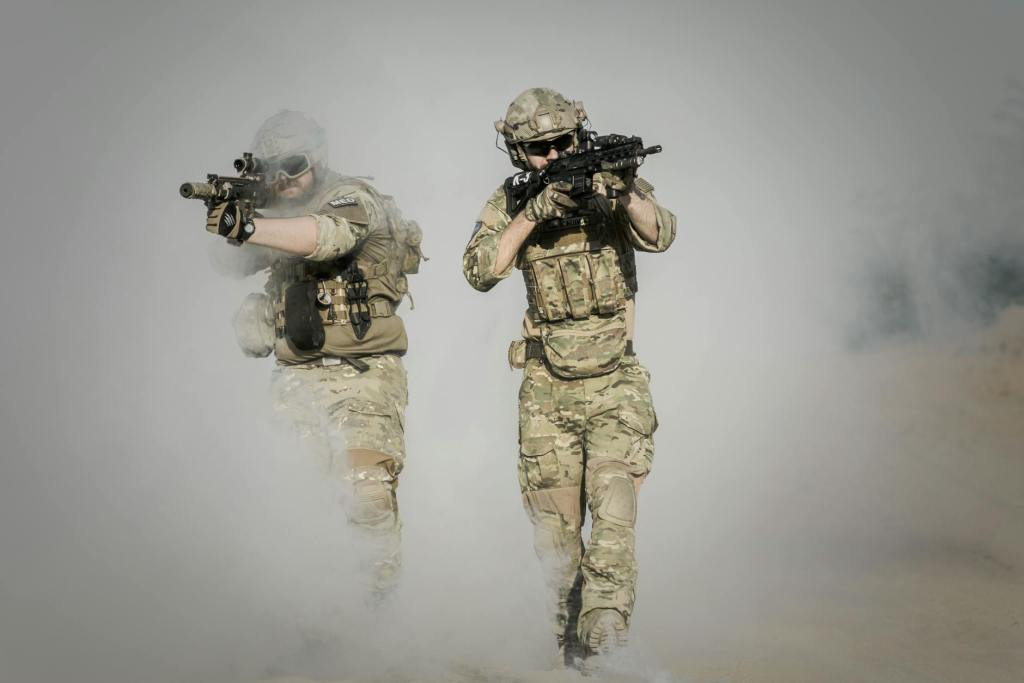
Drones gave Maria the creeps. The ones in the air weren’t so bad. It was the ones which scuttled around the neighbourhoods in South Manilla like so many shiny cockroaches, clicking under the feet of the pedestrians and putting their sensors into everything, which got to her.
They would enter peoples’ houses: sneaking under the doors and through the windows, moving over the tables, brushing things with their spindly arms, and disturbing the lolos and lolas at their prayers.
She and the other local representatives in South Manilla had put in a request to stop the intrusions, but South Manilla was officially under the protection of the United States. If that was to continue, the Autonomous Military Ordinance stayed, and that was the last word.
Maria could see the sense in it. She had seen the face of the war, during the invasion of 2035, when there was less grey in her hair. The U.S. army needed a clear picture of the city, for the day when the Chinese decided to roll over the border, and because the streets were always changing- a new shop here, a new restaurant there—they needed to constantly map and re-map.
Also, actual cockroaches were just as ubiquitous in South Manilla. Until the night of the airstrike, Maria could have persuaded herself that the drones didn’t bother her.
Maria had been listening to the radio with her mother, the noise fading in and out like the voice of a ghost. There had been no sound but the hum of electric vehicles passing, the louder roar of petrol-driven jeepneys, and the faint buzzing of the faulty bulb in their living room.
There was a loud crack, the kind of noise you would hear from a stack of concrete blocks being dropped from a height. Simultaneously, the small window to their living room had blown in, along with part of the wall.
Maria staggered into the street; she wasn’t sure why. A blind instinct to get out of a confined space, maybe. A dust cloud blasted her in the face, and the sound of stray dogs barking was almost deafening. She staggered to the end of the road, only then becoming aware of a popping in her ears, as if she had taken a fast elevator ride down a deep chasm.
The house across the street wasn’t there anymore; there was a jagged hole, like a tooth had been ripped out. An old man, wearing shorts and not much else, had limped past her, bleeding at the head; the bright red of his blood was the only colour Maria remembered under all the dust.
Her mother was sprawled on the floor of their shared house, her hair which had always been so carefully kept up over her face. Maria saw her raise her arm towards her face: for a moment, Maria couldn’t tell what was wrong with what she was seeing. Then she realized: from the elbow down, the arm wasn’t there anymore. The explosion had torn it away.
One of the shiny American drones had her mother’s missing limb in its claws, like a rat scavenging a piece of food. It was dragging it away into the shadows on some incomprehensible mission: to eat it, for all Maria knew.
As Maria looked blankly at the disappearing limb, she felt a warm sensation above her collar bone. There was something hard and sharp was projecting from her skin—touching it created stabbing pains, and she suddenly felt dizzy and needed to sit down in the dust cloud, until the medics had come in their white suits.
Maria watched as the General read, his head making subtle movements back and forth. He held the book in two pink hands, nails shiny and white, and it made rustling noises as he methodically turned the sheets of paper.
She wasn’t sure why she had been brought here, except that the other neighbourhood representatives had been injured in the bombing. She supposed the Americans had to explain what was going on to someone.
She thought of all the American soldiers in the Philippines, why did I have to get this one.
The General’s body was of a middle-aged army man, shortish, with a slight belly, but from the nose up his head was metal and crystal. There were subtle whirring noises from somewhere in his body as he scanned the page. Maria wasn’t sure how he was doing it: he had no visible eyes. His smooth, shiny head was like an insect’s shell.
Eventually, he put it down and made a quick gesture with his fingers, like a man playing an invisible keyboard. He said: ‘well?’
Maria found it difficult to get the words out: she was acutely aware of the ache from the deep shrapnel wound she had received in the airstrike. The pain seemed to be cutting straight through to her vocal cords, robbing her of her voice.
She could sense the general examining her: a short, dark Filipina whose sturdy face and body had softened with age. The soldier in front of her was a wall of hard edges, even the parts of him which weren’t metal.
The General said: ‘what do you know about what happened?’
Maria said: ‘my neighbourhood was bombed. We don’t know how many dead, yet.’
The General looked at her; unblinking, disconcerting: ‘do you know what my nickname is?’
Maria said: ‘they call you the Madman.’
The General laughed: ‘That’s right. Do you think they call me in for situations where we are, y’know, in full control?’
Maria shook her head.
The Madman coughed; there was a mechanical sound somewhere, like air blasting through a metal pipe. ‘I don’t want to lie to you, Miss Flores. The situation ain’t great. Not great at all.’
As he spoke his fingers moved up and down, as if pressing keys.
He said: ‘the only good thing I can see is that the Chinese ain’t counterattacking yet. They don’t want to kick off the big one, any more than we do. But that could change when the real shooting starts.’
Maria said: ‘How could this happen?’ She nearly added: how could you let this happen.
‘A freak accident, sweetheart,’ the Madman said. ‘We had a squad exercising a drone battalion at the edge of the demilitarized zone. We like them to work up a sweat before sending them into action in Europe or the Middle East. This squad strayed near the Chinese lines by mistake and tripped some kind of automated defence system.’
He shook his head. ‘A microwave gun. A couple of medical techs found the helicopter later on, said you could smell frying brains from twenty feet away. Two of the three squad members were dead. The other one, took off. We’re not sure who yet. All the body parts are mixed up, burned. Analysis will take at least a few more hours. They took all of the drones with them, though.’
Maria said: ‘how is that possible?’
‘A classic military FUBAR,’ the Madman said. ‘Normally the fact that there are three guys in the squad gives us a back-up. They can be forward-deployed, but then they ain’t supposed to be together. They can be together, but then they ain’t supposed to be forward-deployed. But because it was just an exercise, they went ahead and did it anyway.’
‘The usual connection to the remote team was cut off, so we can’t control them from a distance. With the other guys dead, there was nothing to stop whoever it was rolling them right over the border.’
Maria said: ‘don’t you have a…a…button you can press, to turn the drones off?’
‘Single point of failure,’ said the Madman. ‘Can’t have it. Not with how good the Chinese are at hacking.’ He shook his head. ‘The bottom line is, one thousand of our drones have gone rogue over North Manila. Enough firepower to take out the whole city, and they’ve used it already, at least once. All of them controlled by one soldier. We think they may have been affected by whatever killed their teammates as well.’
Maria said: ‘are you saying it…it damaged this person’s brain?’
‘Could be,’ the Madman shook his head: ‘Why else would they do it?’ He straightened up. ‘Anyway, I’m busy trying to prevent a war, so if you have any other concerns…’
Maria said: ‘I want to come with you.’
The General shook his head: ‘can’t have it, sweetheart.’
Maria said, stubbornly: ‘I am a representative for South Manila. Under the terms of the NANPTO, my government gives me the legal right…’
The Madman said: ‘fine. Just don’t get in the way.’
He sighed and put the book down. Maria was baffled to see the title: The Art of Happiness, by The Dalai Lama.
Maria rode in a military truck to the front lines. The vehicle’s big diesel engine was deafening after the electric vehicles she was used to. The Madman squatted awkwardly in the seat next to her, like a robot folded into a compartment a little too small for it. His fingers moving constantly in their silent dance.
After a while, she said: ‘what do we know about these soldiers? Are they American? British? Filipino?’
‘We have profiles,’ said the Madman. ‘That’s one of the things which concerns me.’
He paused, then recited: ‘number one. Sergeant Allan King. Twenty-eight. American citizen, serving his term on North-South border. Cited for insubordination twice. Suspected of involvement in the unauthorized death of five civilians during the third Straits crisis in ’57, along with the rest of his drone unit. ‘Safari hunting,’ they called it back then. A bad boy, that one.’
Maria said: ‘I can’t remember this. Do you have a piece of paper so I can write it down?’
‘A piece of paper?’ The Madman looked at her incredulously. ‘Number two. Corporal Juan Li. Twenty-five. Chinese-Filipino family, American citizen. Distant relative to the Sami Li, who was convicted of espionage for the Chinese in ’46. Sold a bunch of drone technical specs to them. Good ratings, but suspicion around him, as well. Whispers really, nothing solid.’
Maria said: ‘I really can’t remember this.’
The General said: ‘If you need it again, I can give you it again, just the same. Number three. Corporal Caleb Rodriguez. Twenty-two. Filipino-American- raised by a Filipino single mother, who was killed during the invasion. Joined the army in 58’. His wife lives near the border, in Manila.’
He pulled out a picture and pointed. It showed the three drone operators, wearing military camouflage and identical grins. Sergeant King was a head taller than the others, looking into the camera with hard, flat eyes. Juan, in the middle, was slight, almost frail, his smile with an edge of nervousness. Rodriguez was the youngest; he had his eyes crossed, like a little brother goofing off in a family photo.
Maria said: ‘why does that concern you?’
The Madman said: ‘the two most concerning people to have control of our drones are a pro-Chinese nationalist, or what we technically call a school-shooter type.’
‘I can’t believe anyone who lived in Manila would be pro-Chinese.’
‘You would be surprised,’ the Madman said. ‘Last year a whole district voted to join the North. That was the cover story, at least. At any rate, that district is on the other side of the border now.’
Maria said, changing the subject: ‘it seems impossible for one person to control a drone swarm.’
‘They took it too far,’ the Madman said, shortly. ‘Recruitment drives were coming up short. Used to be, you’d have one Private to direct every sub-unit. They decided they could do without. Replaced it with another layer of automation to handle low-level tactics.’
‘Does that work?’ asked Maria.
‘In theory. But you lose subtlety. And it cuts out the safety net.’ The Madman shook his head. ‘Always remember, our weapons are built by the lowest bidder.’
They sat for a moment, the roar of Manila traffic buffeting their ears like strong winds. Eventually, Maria said: ‘I am trying to work out why they call you the Madman.’
The Madman said: ‘hmm.’
She said: ‘there are some bad reasons a soldier might be called that.’
The Madman grunted, then said: ‘do you have children here?’
Maria said: ‘two in Manila. One in the United States.’
The Madman said: ‘I feel sorrier for the one overseas. The Chinese won’t use nuclear weapons here, so close to their own troops.’
Maria said: ‘is it really that bad?’ Then, seeing the look on his face, she said: ‘oh gosh.’
‘I don’t have children,’ the Madman said. ‘At the moment, I consider that a blessing.’ Seeing her expression he said: ‘lighten up. I am on the phone to the Chinese as we speak—’ he twitched his right-hand fingers in a complex pattern. ‘Hmm. Looks like it’s good news. They’ve given us leave to go in and kill that sumbitch.’
He clapped her on the back. ‘Come on. Let’s get some chow.’
They ate at a noodle stand. The vendor made the noodles dry, the old way, mixing them with two plastic forks. The taste was salty and fishy, and the pork rinds mixed through them crunched between Maria’s teeth.
The Madman ate quickly, sucking up the noodles without spilling anything. Maria asked him: ‘do you need to eat?’
He said: ‘this is better than what I’d get back at base. More human, you know? People made this by hand, like they would in the old days.’
‘What would you get back at base?’
‘Charging cable. Quite relaxing. I bring a book.’
Maria gave him a hard look, not sure whether to take him seriously. She said: ‘you say it’s good news, that the Chinese are letting us in.’
‘It is,’ the Madman said. ‘It means they think we have a common enemy.’
‘What’s the problem, then?’
‘Still the drones,’ he said. ‘These are some badass drones. Very advanced.’
‘And?’
‘And we don’t know what they intend to do with them,’ said the Madman. ‘They have a private army. One which could march through both armies on the Eastern Front in WW2, take Moscow and Berlin, no sweat.’
‘Aren’t there safety features?’
‘What are you, a Liberal?’ the Madman said.
Maria said: ‘what is your plan, then?’
The Madman said: ‘there is still a single point of failure. That’s the person controlling them. That’s what we gotta pin our hopes on.’
They travelled through the front lines in another military vehicle, this one armoured with plates two inches thick.
They had sat in silence for a long time. Finally, Maria said: ‘are you serious about killing them?’
The Madman said: ‘sure as shooting I am. They disobeyed orders and almost started a war. Even if they wouldn’t be executed anyway, I would kill them twice.’
Maria said: ‘one of my children is that age. You should at least try talking first.’
The Madman said: ‘the young ones are the worst. We get types, sometimes, we should have screened out. Ever hear of the Houston incident?’
Maria shook her head.
The Madman said: ‘a buck private took control of 150 army drones which were supposed to be on an exercise. Unleashed them on his hometown. The school, the airport. Nineteen-year-old who should never have been near those things. He had some grudges to settle, you might say.’ The Madman shook his head. ‘It wasn’t pretty. A lot of people died. Would have been more, but I was there to shut it down. King fits that archetype, unfortunately. Fits it very well.’
He drummed his fingers nervously on the dashboard; for once, it looked like a human gesture.
The neighbourhoods over the border were just like the ones in South Manila. Maria supposed there was no reason for them not to be. There were few people on the streets; a handful of old merchants selling fruit and snacks. Somewhere, there was the smell of frying meat. Everyone else seemed to be keeping their heads down.
The Madman said: ‘getting a couple of intelligence reports. The drones are circling a couple of neighbourhoods near the border. Seems to be a search pattern.’
He added: ‘you know, in the past, only people on my level would have to make those kinds of decisions. Controlled this many units. Now, every Private is effectively a General.’
He mused: ‘maybe that’s why he went crazy. Some people can’t handle it.’
The Madman added: ‘you know what lesson they’ll take from this? Probably that they should get rid of the human commanders altogether.’
He seemed on edge; his fingers were moving faster than ever, and the whirring sounds from his cranium were more constant.
‘That seems like a bad idea,’ said Maria.
‘It is,’ said the Madman. ‘Then again, maybe humans and machines shouldn’t mix at all. Never seems to go well.’
Maria looked at him, wondering again if he was joking.
There was a noise above them—
Maria had learned about the End of Days as a little girl, when Jesus would return with an army of angels and overthrow Satan once and for all. At the time she had tried to picture what a war of angels and devils would sound like, would look like. Now she knew.
It began with a single, huge, red-gold explosion high in the air, which scorched her face like an instant sunburn and reminded her of the times she’d stood too close to the fireworks on New Year’s Eve. For a split second, she thought it was a nuclear weapon.
It was followed a thunderclap which beat against her ears- seemingly more than once, a cluster of soundwaves all coming together- like someone smashing two gigantic pieces of scrap metal together, over and over again.
As she instinctively ducked, there were a series of shorter, sharper explosions, pops really, compared to the first, which filled the sky with greyish-brown smoke. There were shiny glints of metal in the smoke, moving almost too quickly for her eyes to follow.
Maria heard something whistling past her ear, then someone very fast and very strong grabbed her and pulled her behind a wall.
The world turned grey for half a second, then she realized that the Madman had pulled her into cover. He pointed to the sky. ‘Watch. Not many people get a chance to see this.’
At first the action was so quick and violent Maria couldn’t follow it. It seemed like chaos: something her mind was simply not equipped to understand.
She slowly realized that the gleams of metal in the air were drones, flight after flight of them, moving together flocks of birds. The darker glints, which were coming from the Chinese direction, were numerous but moved in a less co-ordinated way.
When the bright and darker formations came together it was like lines of battleships passing each other: there were dark puffs of smoke from each side as they merged in wings and swarms, and smaller projectiles shot between the lines, cunningly twisting and turning to attack a weak flank or an unaware opponent. The drones dropped at a steady rate, the darker formation more quickly than the light ones. Every once in a while, a drone from one side or the other would make a kamikaze run into the middle of the opposing formation and detonate with a sharp crack and a burst of ochre smoke, and all the drones nearby would be torn to pieces and drop, like birds stricken with a shotgun.
There was, Maria realized, a larger drone on the periphery of the fight: hovering perhaps half a mile back on the American side. Occasionally, the bigger machine would deign to fire into the enemy formations: that was what the bigger explosions were, missiles which might wipe out a hundred robots all at once. Sometimes an enemy drone came near the controller and would be contemptuously swatted: most of them abruptly went dark and began smoking, then dived towards the earth, as if stricken by black magic.
Maria realized that the battle she was watching—three or four thousand drones mixing it in like fighting cats—was only part of the picture. Perhaps not a tenth of the whole thing. The sky was black with drones: thousands upon thousands of them, and she could hear explosions in the distance. Presumably the whole of Manilla’s sky swarmed with drones, like locusts.
Maria yelled, over the din: ‘I thought you said there were a thousand.’
The Madman said, calmly: ‘the little ones are hardly drones, by our standards. More like, munitions.’
Maria said: ‘are those all your drones? All of them?’
The Madman said: ‘yes. The swarm of swarms.’ There was a smile on his face as he watched the machines work.
The swarm had moved on. Maria and the Madman had begun walking deeper into North Manilla when something dropped front of them with a thud, which reminded her of the noise she’d heard during the air raid.
It was a robot, two-legged and almost as slender as a human. Those Maria had seen up close before looked worn, dented and oily, like second-hand cars. This one looked factory fresh. It moved more smoothly as well, blurring from position to position almost faster than Maria’s eyes could follow.
Three smaller robots hovered near it, on helicopter rotors, like soldier ants attending their queen.
The Madman said, quietly: ‘don’t make any sudden moves.’
‘Am I in danger?’ asked Maria.
‘I’m a high-value target. It depends on how smart he’s been with the programming,’ the Madman said.
The machine regarded them, and a few lights blinked on and off on its surface.
Maria said: ‘how will staying still help?’
The Madman shrugged: ‘to be honest, it won’t help.’
‘Then what’s the point of staying still?’
‘I was just trying to reassure you.’
Maria looked at the eyeless metal thing in front of her. Although it was more still than any human being, it seemed somehow alive.
A connection came together in her mind, in one of those flashes of insight which are sometimes triggered by imminent death.
Maria breathed deeply, then said: ‘Rodriguez. We can save your wife.’
The sensor of the machine seemed to look through her, and for a brief moment, she thought they were both about to die.
Abruptly, the robot tensed its two hindmost legs and launched itself upwards; there was a brief roar of jet engines as it took to the air.
The Madman looked at her oddly and said: ‘good news. It wants us to follow it. We’d better hope your hunch pays off.’
There seemed to be nobody around in the neighbourhoods: it was silent except for the occasional noise of helicopter rotors overhead.
Maria said: ‘I don’t like this.’
Madman said: ‘there are a lot of the sub-drones circling overhead.’ His fingers moved. ‘Looks like a search pattern. Best not to talk openly. They can pick up our lip movements.’
The quality of the breeze changed, became saltier. They could see the ocean in glimpses through the buildings. They turned another corner, and in front of them was a rank of gleaming machines, more-or-less human shaped, but bulky with armour and weapons.
A cloud of smaller machines buzzed overhead, powered by small helicopter blades. Maria saw camera lenses open and shut, taking in every expression on their faces.
The machines led them, like an honour guard, through a poor neighbourhood. There was an overpass, metal protruding from some of the concrete pillars, then an underground traffic route beneath it, and they were escorted through it. The number of drones around them in the tunnel seemed to be increasing; they had disturbed the sentries of the hive, and the swarm was coming out to meet them.
They came to the deepest part. The phalanx of metal around them gleamed, in the dim light. Maria thought it must have been like being surrounded by armoured cavalry, hundreds of years ago.
At the widest point of the tunnel, Corporal Rodriguez was squatting in a low, plastic chair.
The Madman said, under his breath: ‘good guess.’
Maria said: ‘I remembered what you said about his wife. I don’t think the other two would have been searching for someone. And then I remembered what you said about that district joining the Chinese side.’
The Madman said: ‘problem with having all this information. You still have to ask the right questions.’ He shook his head in a quick blur of motion, like a dog. ‘I’ll take it from here.’
Rodriguez was clean-shaven, and wearing immaculate grey-green camouflage, except for a brownish-red stain on his right shoulder. His nose and chin were long, and his face had a vaguely canine look.
He was engrossed in some kind of display screen; lights played across his face like reflections from a pool. His hands occasionally tapped something in mid-air, moving just as fast as the Madman’s.
Maria half expected the Madman to snap his neck, as quickly as he’d pulled her out of the line of fire. His mouth, under the metal part of his head, was a flat, neutral line.
He said: ‘soldier! Attention!’
Corporal Rodriguez looked up at them, then jerked to his feet and snapped a salute. He said: ‘Sir!’
His voice had a mushy quality, Maria noticed, as though he had recently bitten his tongue. His salute was fast and correct, but he didn’t meet the Madman’s eyes.
The Madman returned his salute, then said: ‘situation report.’
Corporal Rodriguez’s eyes darted between the two of them. They were very blue, Maria saw, and nervous. She saw another brownish-red stain on his earlobe and the top part of his neck, as if he had bled from his ear.
The soldier said: ‘Sir! The neighbourhood is secure. Two skirmishes with Chinese drones since this morning. My units are still ninety-eight percent operational.’
Maria looked at the screen; it shifted every few seconds between a two and three dimensional view of Manila. Certain sections were outlined in blue; rings of small dots, moving in concentric circles, surrounding several neighbourhoods. Beyond the rings were red dots, swimming into and out of existence, like mosquitos going into and out of the light.
She realized that the blue dots were friendly units, the ones in the cohorts controlled by Corporal Rodriguez. The arcs and circles around them represented the zones covered by their weapons. The red dots were, presumably, enemies, fading in and out of view of the drone sensors.
The Madman said: ‘any accidents?’
‘No civilian casualties, sir.’
Maria almost said something, but the Madman raised a finger at her.
The Madman tilted his head: ‘why did you attack those Chinese units, son?’
For the first time, the Corporal looked defensive: ‘they attacked ME, sir. They keep trying to force my units to land. It’s been all I can do to stop them getting into microwave range.’
The cyborg muttered: ‘opportunistic bastards.’
Maria said: ‘no bad language.’
The Madman said: ‘I reckon the Chinese saw an opportunity to capture some next gen technology and blame it on a low-ranking American soldier gone rabid. They’re not picky about collateral damage, either. A couple of hits on South Manilla neighbourhoods would justify the force they needed.’
Maria said: ‘those bastards.’
The Madman said: ‘I have new orders for you, Corporal. Pack the battalion up and take it back over the border, to our lines. At the double.’
Corporal Rodriguez’s eyes stayed locked on the Madman; Maria noticed a bead of sweat run down his forehead. He said: ‘No can do, sir! I picked it up a minute ago. Chinese units, totalling high four digits, are inbound on our position. Drones.’
The Madman looked at the screen. His fingers twitched in a quick pattern. He swore, loudly and colourfully. ‘Alright. Do what you gotta.’
Rodriguez nodded and tapped some keys quickly.
‘What will happen to us?’ Maria said, pitching her voice so that Rodriguez couldn’t hear it.
‘The Chinese aren’t discriminating. They are happy to wipe out a neighbourhood if it means capturing one of ours. This could get messy.’
There was a beeped warning from the console. Rodriguez glanced at it, then said: ‘They’re being cautious so far.’
Maria thought she could hear, faintly, the sound of massed rotors in the distance, like the noise of bomber formations going into the attack in WW2.
Sweat was standing out on Rodriguez’s forehead; with gestures, he was clicking rapidly through several different screens, and Maria realized that he was juggling a task which was meant for at least three people.
There was a rumbling sound from outside, then a scream like tearing concrete. Maria glanced nervously at the ceiling, but the two soldiers seemed to take it casually. Rodriguez relaxed: ‘they are holding off. For now.’
Maria said to the Madman: ‘can you take control, if something happens to him?’
She said it a bit too loudly, and Rodriguez glanced at her. His gaze was dark and steady. There was something wrong, though—a hint of what Maria would have called a ‘thousand-yard stare.’
He said: ‘my drones are programmed with attack and search patterns. If something happens to me, the console will lock up, and they will go to their pre-designated targets.’
The Madman said: ‘I think, Corporal, we would both be very interested to know what those targets are.’
Rodriguez said: ‘sir, you don’t need to lie to me. I know the war has started already.’
The Madman said: ‘That’s not true. You’ve pushed us close to it, but that just ain’t true. The Chinese shot you down by mistake.’
He made an unobtrusive wriggle of his fingers. ‘You thought the big one was underway, and you wanted to get your wife out. Didn’t it occur to you that bringing your battalion into her neighbourhood was just going to make things worse?’
Rodriguez said: ‘with respect, sir, I doubt you have a family. You can’t understand what it’s like.’
His voice broke: ‘we might even have a kid together, already.’
The Madman said: ‘I don’t have a family, that’s true. But she does.’
Rodriguez looked at her: his gaze was uncertain, suddenly. He took in the bandage on her shoulder.
Maria said: ‘my mother has already been hurt by this. She’s in the hospital. I have children as well.’
Maria saw herself as the Madman must have intended: wounded, vulnerable. A perfect victim.
She said, with a rush of anger: ‘you could get everyone in Manilla killed. Don’t you think your mother would be ashamed, if she was alive?’
Rodriguez’s head sagged to his chest. He said, quietly: ‘no-one else was helping me. No-one.’
The Madman said to Maria: ‘uh-oh. They’re coming back in.’
Maria looked at the screen: red blips were swarming around the concentric blue circles, like clouds of metal insects.
The Madman said: ‘it’s up to you now, soldier. You need to get us out of here.’
Rodriguez looked at the screen, then back at them. For a moment, he paused. Then his hands moved to the keyboard, blurring through commands with machine-like precision.
There was a loud concussion, like a concrete sneeze, and suddenly the subway was filled with grey daylight and noise. Maria saw that a neat hole had been blown in the ceiling, one block knocked out of place, leaving them exposed to the air.
Maria heard the bomber-fleet chugging of rotor engines, and two of the servitor drones appeared, extending claws toward her. She shrank like a mouse in front of a predator, until she belatedly realized that they were offering her a lift.
She looked at the Madman, who shrugged: ‘how did you think he survived the helicopter crash?’
Maria tentatively reached out her hands, and the robot claws clamped over her forearms, almost painfully, and she was lifted into the air.
Maria didn’t remember much of the next few minutes. It was a frenzy of metal and explosions and shrapnel, and of things coming far too close to killing her, like flying through an endless swarm of deadly bees.
It was sometime later. The Madman and Maria were sitting at another noodle bar. It seemed like the only thing either of them had energy for.
Maria said: ‘that was a bad thing you did.’
The Madman said: ‘hmmm.’
Maria said: ‘you knew you needed me there, to persuade him. You manipulated that whole situation.’ She paused: ‘but at least no-one else got hurt.’
The Madman said: ‘unless you count drones. Phew! Twelve thousand kills to five hundred.’ He shook his head. ‘They’ll think twice before messing with our next-gen tech again.’
‘What will happen to Rodriguez?’
The Madman said: ‘neither us nor the Chinese have any interest in publicising this incident. Mistakes on both sides. Too embarrassing. He will probably get away with a discharge. Maybe even an honourable one.’
Maria said: ‘what about my mother?’
The Madman said: ‘the medical drone preserved her limb. We think we can re-attach it. We will do what we can, anyway.’
Maria was quiet for a minute, then said: ‘even so…’
The Madman said: ‘what I did is what officers have done since the days of the Roman empire. You can add more and more layers of shit to it, make it more and more abstract. But it’s still the same thing, underneath.’
He scratched his metal dome. ‘Drones make it easier to kill people by remote control. Much harder when you have to look the person you’re hurting in the eye.’
Maria said: ‘did you ever plan to kill him?’
The Madman said: ‘Not once I knew who it was. King might have done it on a power trip. Li might have been a genuine traitor. But when I found out it was Rodriguez, I knew it was personal, and I knew I could talk him down.’
The faint noise and smell of the traffic filtered in from the street.
Maria said: ‘tell me, then.’
The Madman said: ‘When I was stationed in Iraq, I gave my men copies of the Quran to read. That’s when they started calling me The Madman. Just a military thing. Nicknames.’
Maria said: ‘that makes sense. What do you call the one sensible person in a horrible organization?’
The Madman said: ‘I think this whole thing could be good for Filipino-American relations.’ He added, ironically: ‘remember, every time you wave at a civilian, China cries.’
Maria shook her head: ‘let’s just eat.’
They sat there, eating noodles, as the cars moved around them, and the small instruments in the Madman’s head—not a bit of it human—clicked and whirred.
Follow and Connect with Chris Barker
About
In his day job, Chris has been a journalist for the last twelve years and he has written prolifically about film, TV and literature in his spare time for the last eight years.
Fiction has been Chris’ passion since reading Roald Dahl when he was young, and he has come back to writing it in short form many times. He has written background stories for the sci-fi tabletop game Astrabellum, published online. He has also had a story accepted for publication in the June 2026 edition of Horrorsmith Magazine.
Social Media
Bluesky account: https://bsky.app/profile/mediapundit.bsky.social


Leave a comment